
Choosing Your Career Path and the Tradeoffs You Must Be Aware Of - E699
"It's important for you to observe what powerful people do, not what they say. There's often a very large gap between what is said versus what is unsaid. There's a very big difference between what people say in public versus what they say in private, one-on-one conversations without a recording device or camera on... everybody knows at some level that sacrifices had to be made." - Jeremy Au
"You need to own whatever it is. Own what you're good at, own what you're bad at. Own your discomfort. But don't be afraid of it. Don't be afraid of your strengths, your passions, or your weaknesses. Don't try to be that jack-of-all-trades who hopefully gets an A-minus in everything, just because that's what school wants you to do." - Jeremy Au
"Today, I'm back in Singapore, and I would say I'm a big fish in a small pond... There's no moral virtue to being a small fish in a big pond versus a big fish in a small pond. But I want you to be thoughtful about your career, because at some stages, you'll be a small fish in a big pond, and at others, you'll be the big fish in a small pond. Be comfortable seeing the situation for what it is and switching between those phases." - Jeremy Au
In this episode, Jeremy Au shares raw, unfiltered career advice, challenging the traditional self-help narratives often sold to young professionals. He unpacks why observing what powerful people do rather than what they say is crucial for navigating the business world. Drawing from his own experiences in Singapore and at Bain & Company, Jeremy dives into the strategic dynamics of being a "big fish in a small pond" versus a "small fish in a big pond." He also explores the critical balance between "outside-in" societal expectations and "inside-out" personal passions. Ultimately, Jeremy explains why actively choosing your own pain—while ruthlessly prioritizing your health and authentic relationships—is the foundation of a truly sustainable and fulfilling career.
00:00 – The Illusion of Self-Help and Success
00:52 – Own Your Power and Quirks
02:13 – Big Fish vs. Small Fish in the Career Pond
03:56 – "Outside-In" Expectations vs. "Inside-Out" Motivations
05:05 – Lessons from Bain & Company: Finding the Right Fit
06:44 – Prioritizing Health, Relationships, and Choosing Your Pain
08:34 – Conclusion and Outro
Watch on YouTube: https://www.youtube.com/watch?v=egqxCAjVBCY&list=PLl9u6ECOP8_7scb97PE3whKu4yJVizIOd
Listen on Spotify: https://open.spotify.com/episode/6KGX0z19KlR4jaXOQb5cTV
Keywords: Career Development, Singapore Business, Professional Growth, Bain & Company, Leadership Advice, Mental Health in Tech, Work-Life Balance, Southeast Asia Tech
How Lasers Could Replace Undersea Cables & Reshape Global Internet | Rohit Jha - E698
"Without telling the board, we took some capital out. Most of our team is ex-space, so we gave them extra beer and pizza and said, 'Look, you have this much money. Let's get to space, and then if we are successful, everyone will be happy and no one will say anything.' Taking an insane risk mentality is absolutely critical to success." - Rohit Jha, Co-founder and CEO of Transcelestial
"The bottleneck is not the connectivity at the city level, but the connectivity between data centers sitting in different countries or continents. What we are now building is essentially an undersea cable replacement. We are putting 40 satellites around the equator, forming a ring that provides connectivity of a terabyte per second, moving internet and cloud capabilities directly to orbit." - Rohit Jha, Co-founder and CEO of Transcelestial
"You have had a space company like Starlink launch and become ten times bigger than the biggest telco in the world. Telcos, like power grids, will remain nationalistic as long as nations exist because they route sensitive information tied to national security. However, they are now forced to adopt the space domain organically to provide better latency and lower costs." - Rohit Jha, Co-founder and CEO of Transcelestial
Rohit Jha, Co-founder and CEO of Transcelestial, joins Jeremy Au to discuss the future of global connectivity through laser communications. They unpack how Transcelestial is building an orbital ring of satellites to effectively replace traditional undersea cables and move cloud capabilities directly into space.
Rohit breaks down the strategic difference between Transcelestial's high-bandwidth laser network and radio-frequency solutions like SpaceX’s Starlink, explaining why partnering with national telcos is more sustainable than competing against them. Finally, Rohit shares a wild personal story about fending off muggers in Germany, drawing parallels to the brave, risk-taking mentality that led his team to secretly launch their space division.
00:00 - Sneaking capital to launch a space division
01:13 - Introduction to Transcelestial and laser internet
03:39 - From investment banking to understanding global networks
05:39 - Iterating product-market fit with terrestrial telcos
07:35 - How laser technology differs from SpaceX and Starlink
10:54 - Building an orbital ring to replace undersea cables
14:54 - The future of physical telcos in the age of space internet
19:14 - Why telcos prefer partnering over competing with space giants
26:04 - A personal story of bravery: Fighting muggers in Germany
28:46 - Why taking calculated risks is critical for multi-planetary goals
Watch on YouTube: https://youtu.be/VoQXHJnLV04
Listen on Spotify: https://open.spotify.com/episode/41mKqnvXUsF1h9JOSIJ1Ox
Keywords: Space Tech, Laser Communications, Satellite Internet, Telecommunications, Undersea Cable Replacement, SpaceX Starlink Alternative, Southeast Asia Deep Tech
Trump Xi Summit Decoded: Thucydides Trap, Boeing Deal & China AI Chip Strategy - E697
"When you have two powers who have a deep mutual suspicion of each other, and a meeting doesn't escalate any of the tensions or cause the relationship to deteriorate, both parties will reiterate their bottom lines. Having those cards clearly laid out is already a success because policymakers on both sides do not have the illusion that the relationship will be smooth sailing for the next decade. What they want is to make sure that both parties still talk and things do not go for the worse." - Jianggan Li
"The DeepSeek and ByteDance founders are dedicating essentially 100% of their time and money into AI research, and they are engineers by training, deeply involved in the process. That's the key difference between them and other large Chinese companies trying to build AI. By leveraging engineering capabilities and hard work, sooner or later they figure out a way to deliver top-notch AI models in a very cost-efficient way." - Jianggan Li
"NVIDIA used to have a monopoly of 95% of the Chinese market, and now they have less than 10%. The American theory that the Chinese industry could not catch up to American chips and quickly create a domestic supply chain has been proven untrue in reality. If we didn't have the export ban, America would continue to have massive economies of scale, but the ban forced researchers to use domestic chips, accelerating the evolution of China's own semiconductor industry." - Jeremy Au
In this episode, Jeremy Au and Jianggan Li unpack the geopolitical and economic ripples of the recent Trump-Xi summit in Beijing. Moving beyond the mainstream media headlines, they analyze the strategic optics of the leaders’ meetings at Zhongnanhai and the Temple of Heaven, and what it signals for avoiding the "Thucydides Trap."
The conversation pivots to the intense technological rivalry between the US and China, focusing heavily on semiconductors and artificial intelligence. Jeremy and Jianggan discuss how US export bans inadvertently accelerated China's domestic chip manufacturing, eroding NVIDIA's market share in the region. They also explore the rise of highly cost-efficient Chinese AI models like DeepSeek, the shifting strategies of multinational CEOs like Elon Musk and Jensen Huang, and why modern cross-border startup founders are increasingly choosing international markets to escape China's cutthroat domestic competition.
00:00 - Introduction & The Geopolitical Stakes of the Trump-Xi Summit
03:45 - Key Political Figures & Creative Diplomacy to Bypass Sanctions
06:25 - The Thucydides Trap: Framing the Rising vs. Ruling Power Dynamic
12:10 - Strategic Optics at Zhongnanhai and the Temple of Heaven
16:45 - Business Delegations, Boeing Deals, and Elon Musk’s Position in China
19:05 - Jensen Huang, AI Chips, and Reevaluating the Semiconductor Export Ban
21:50 - Why Tech Founders Are Choosing International Markets Over China
23:10 - The Rise of DeepSeek and China's Cost-Efficient AI Strategy
28:00 - How US Export Controls Accelerated China's Domestic Chip Production
33:05 - The Future of US-China Relations Under Trump and Xi
Watch on Youtube: https://www.youtube.com/watch?v=eNrDgq6d6Zg&list=PLl9u6ECOP8_7scb97PE3whKu4yJVizIOd
Listen on Spotify: https://open.spotify.com/episode/7dvBW4P3O8oBF9efHPLH99
Keywords: US-China Relations, Semiconductor Export Ban, AI Chips, Trump-Xi Summit, DeepSeek AI, Geopolitics and Tech, Nvidia China Market, Southeast Asia Tech Ecosystem, Cross-border Startups, Global Tech Supply Chain
Wen-Szu Lin: Lessons learnt from Franchise Failure to Scaling Uber in Asia - E696
"Nothing we did in China we knew. Nothing I did in Uber I knew how to do before. But I literally went in, like, 'Give me an hour or two, let me go learn it.' I learned the growth mindset in consulting... I realized that it's actually not rocket science for a lot of these things. You can actually learn it." - Wen-Szu Lin, Author
"Something is going to go wrong, and you can really take it as, 'Oh, this sucks,' or you can be like, 'Oh, you know what? That's a good learning moment.' There are three things I always ask our talent acquisition team to look for: hard work, a positive mindset, and a growth mindset." - Wen-Szu Lin, Author
"I was the first person internationally to get hired into Community Operations. As Uber kept scaling, other teams asked us to help do operational work, so we started taking up back-office operations. We just kept growing organically across Asia to teams of thousands. It became one of the largest teams at Uber that no one has ever heard of." - Wen-Szu Lin, Author
Wen-Szu Lin joins Jeremy Au to discuss his unconventional career path from IT consulting in the US to navigating the complex entrepreneurial landscape in China, and eventually building a massive internal organization at Uber. He shares the harsh realities and costly lessons of trying to scale an Auntie Anne's pretzel franchise in Beijing right around the 2008 Olympics. Together, they delve into why Western food and beverage concepts often struggle in Asian markets, the nuances of adapting to local consumer habits, and the logistical nightmares of setting up physical retail spaces.
Wen-Szu also explains how his string of entrepreneurial "failures" equipped him with the resilience and growth mindset needed to build Uber's Community Operations across Asia from scratch. Finally, he shares key insights from his books, The China Twist and Deliver, emphasizing why hard work, clear thinking, and the ability to learn on the fly are the ultimate career hacks for tech leaders and founders alike.
Check out Wen-Szu Lin’s books The China Twist and Deliver: The untaught lessons to growth hack your career at www.wenszulin.com
00:00 - Introduction to Wen-Szu Lin
01:47 - From US Consulting to Entrepreneurship in Asia
04:48 - Securing the Auntie Anne's Master Franchise Deal
09:55 - The Realities of Doing Business in 2008 Beijing
15:20 - Why the Pretzel Franchise Ultimately Failed in China
20:45 - Winding Down the Business and Pivoting to the Philippines
22:07 - Writing "The China Twist" to Process Failure
24:45 - Building Uber's Community Operations in Asia
27:54 - Writing "Deliver" and Growth Hacking Your Career
30:52 - The Three Key Traits of Successful Tech Talent
Watch on YouTube: https://youtu.be/BHTvqHl3Jn4
Listen on Spotify: https://www.youtube.com/watch?v=BHTvqHl3Jn4&list=PLl9u6ECOP8_7scb97PE3whKu4yJVizIOd
Keywords: Startup Failure, Uber Asia, China Market Entry, Growth Mindset, Franchise Business Operations, Tech Leadership, Career Development, Food and Beverage (F&B) Asia, Community Operations
Find Your Unfair Advantage in Business and Use It - E695
"When you come to understand that the world is not fair and is not easy, I want to remind you to pick your battles. I want you to play the sports where you have an unfair advantage. It's okay to be unfair. If you love carbon and you love accounting, and nobody else loves carbon or accounting, congratulations—you have an unfair advantage for a job that nobody else wants. Play to where it's unfairly to your advantage."
"Communicating is about persuading someone to do something, especially to buy something. I want to contrast that with the market, which is really about listening. The best people in marketing are those who are equally good at listening to the market and articulating that market truth back into the market to make it real. When you can do both sides of it—the yin and yang of the market and the marketing—you will be truly effective."
"Startup land is very much about 'founder-problem fit'—does the founder truly care about the problem they are solving? Being able to understand that match is crucial. When you are assessing a founding team, you need to understand whether they are willing to go through all the pain and struggles of actually building the company, because building a startup is not easy."
In this episode, Jeremy Au dives into the realities of building a successful career and startup by mastering the "yin and yang" of marketing and understanding founder-problem fit. Sharing his deeply personal motivation for working in the cancer diagnostics space, Jeremy illustrates why finding a strong "why" is essential for enduring the inevitable hardships of entrepreneurship. He also challenges the fairytale narrative of a fair world, urging listeners to have the courage to do good while strategically playing to their unique, unfair advantages in business and life.
00:00 The Yin and Yang of Marketing: Balancing Listening and Persuading
01:09 Founder-Problem Fit: Assessing a Founding Team's Motivation
02:07 Finding Your "Why": A Personal Mission in Cancer Diagnostics
04:13 Breaking the Fairytale: The Courage to Be Good in an Unfair World
06:47 Play to Your Unfair Advantages: Picking Your Battles Strategically
Watch on YouTube: https://www.youtube.com/watch?v=YdHgfkzIie8&list=PLl9u6ECOP8_7scb97PE3whKu4yJVizIOd
Listen on Spotify: https://open.spotify.com/episode/7oysgzH5qOrda8sMF21xkC
Keywords: Founder-Problem Fit, Unfair Advantage, Startup Founding Team, Marketing Strategy, Career Advice, Resilience in Entrepreneurship, Cancer Diagnostics Healthtech, Market Listening

Solo Founding at 58 and AI as a force multiplier for the medical industry | Jay Fajardo - E694
"As an experienced founder, it feels like you've got a superpower because you're a product builder. So a lot of the lessons that you learned before, those standards, the principles that you've learned in guiding the technology, the AI, it's crazy easy. It's almost like cheating, but it only feels that way when you've been in it for years." - Jay Fajardo, CEO of BetterClinic
"When the action is really heating up, you participate, you build stuff, and then later it stabilizes and you start doing ecosystem work. It's AI that's driving a lot of the disruption today. It's giving a new context for builders and founders to build in. There's so much opportunity to change the way of doing things in different verticals. That's why I decided to build again... it's founder mode back, it's like I can't miss this." - Jay Fajardo, CEO of BetterClinic
"Everybody says there's BPO, there's business process, financial analysis, medical analysis. But you can tell it can be replaced already. So there's a threat. It's a big threat. I'm not sure what the solution is, but for sure it's coming. And it's going to impact not just that industry, because that industry is fueling an ecosystem around it—real estate, retail. So that's actually a thing we have to watch out for." - Jay Fajardo, CEO of BetterClinic
Jay Fajardo, serial entrepreneur and CEO of BetterClinic, joins Jeremy Au to share why he returned to "founder mode" at age 58 to build in the AI era. He discusses his new venture, BetterClinic, an AI-powered ambient scribe designed to eliminate the notorious "pajama time" for doctors by reducing administrative work from 40% to 10%. They explore the rise of the solo founder driven by modern AI tools, the hybrid prosumer go-to-market strategies tailored for Southeast Asian healthcare, and the looming economic threat AI poses to the Philippine BPO industry.
00:00 - The Return to Founder Mode: Why the current AI technology wave compelled Jay to transition from ecosystem builder back to a startup founder.
03:50 - The Experienced Founder's Cheat Code: How decades of product building knowledge make navigating and executing AI startups significantly easier.
05:09 - Solving Real Healthcare Pain Points: Moving beyond scheduling apps that amplify issues to using AI to genuinely improve clinical workflows.
08:43 - Eliminating "Pajama Time": Leveraging ambient AI scribes to automate medical notes, insurance claims, and certificates, cutting doctor admin time by up to 75%.
10:35 - A Hybrid Go-To-Market Strategy: Using a mobile-first, prosumer approach to bypass rigid enterprise healthcare systems and directly empower doctors.
12:40 - Regional Healthcare Nuances: Navigating the structural and commercial differences between medical practices in the Philippines, Malaysia, and Singapore.
14:52 - The Solo Founder Movement: How AI and cloud tools are lowering the barrier for solo founders, mitigating the traditional VC risk of co-founder breakups.
20:00 - The Future of Medical AI: Predictions on personal medical advisors, autonomous health diagnosis, and the integration of spatial AI in surgery.
22:50 - The Threat to the Philippine BPO Sector: Analyzing how AI's rapid advancement in voice support and data analysis threatens the broader local economy.
Watch on YouTube: https://www.youtube.com/watch?v=sIOCY_LtObM&list=PLl9u6ECOP8_7scb97PE3whKu4yJVizIOd
Listen on Spotify: https://open.spotify.com/episode/5cuHb44UQE1WkDob2FryGY
Keywords: AI in Healthcare, Philippine Startup Ecosystem, Serial Founder, BPO Industry AI Threat, Healthtech Southeast Asia, Solo Founder Dynamics, Medical Workflow Automation, Proptech and Telemedicine, Prosumer Go-To-Market
How the Global Energy Crisis is rewiring Southeast Asia Tech | Kristie Neo - E693
"What's beginning to come up among VC investors, particularly in the UAE, is how they can integrate defense and security into their mandates. In the past, we saw a lot of B2C and B2B businesses riding on consumer-focused trends. Now, defense and security are a huge part of the equation because even the UAE, the safe haven of the Middle East, could get attacked. There has definitely been a shift in that part of the psyche." - Kristie Neo, Asia Editor at PitchBook
"A lot of VCs are advising their portfolio companies to start ramping up their cash runways now. If it used to be 12 to 18 months, they are now pushing for 24 months or more. We just don't know how long this conflict is going to last, and while VCs have dry powder to deploy, they themselves cannot be certain if it will be enough to sustain their ecosystems." - Kristie Neo, Asia Editor at PitchBook
"For Asia, we are unfortunately highly dependent on oil imports, with the exception of Malaysia as a net oil exporter. This means inflationary effects are going to keep going up through the roof. If you are in the Philippines, you may not get a steady electricity supply, and food and energy prices are going to rise. The longer this goes on, the worse it's going to get." - Kristie Neo, Asia Editor at PitchBook
Kristie Neo, Asia Editor at PitchBook, joins Jeremy Au to discuss the profound geopolitical and economic ripple effects of the ongoing Middle East conflict on Southeast Asia and the global venture capital landscape.
They unpack how the crisis is driving a surge in inflation, energy insecurity, and a renewed focus on renewable energy, recycling, and even nuclear power across ASEAN nations. Kristie shares insider perspectives from the UAE on how Middle Eastern VCs are shifting their investment mandates toward defense and security tech, while actively advising portfolio companies to extend cash runways beyond 24 months. Finally, they explore what these global shifts mean for Singapore’s standing as a safe-haven financial hub, the potential influx of diversified capital, and the urgent need to develop a homegrown defense and dual-use tech ecosystem.
00:00 - Introduction & Kristie Neo’s New Role at PitchBook
03:30 - The Middle East Crisis & Global Energy Shockwaves
06:40 - How War is Shifting VC Mandates to Defense Tech
08:00 - Extending Startup Cash Runways in Times of Uncertainty
09:30 - Southeast Asia’s Inflation & Energy Vulnerabilities
12:30 - The Accelerating Demand for Renewable & Nuclear Energy
16:00 - Fundraising Challenges for Southeast Asian Startups
18:40 - Middle East Resilience & Capital Diversification
22:50 - Singapore’s Position as a Safe Haven Hub
25:00 - The Rise of Dual-Use & Defense Tech in Singapore
Watch on YouTube: https://www.youtube.com/watch?v=mzniOidR2iQ&list=PLl9u6ECOP8_7scb97PE3whKu4yJVizIOd
Listen on Spotify: https://open.spotify.com/episode/2kSmwzjo8AXsJvtS6Qnq21
Keywords: Venture Capital Asia, Southeast Asia Startups, Macroeconomics & Geopolitics, Defense Tech Ecosystem, Energy Security, Startup Cash Runway, PitchBook Private Markets, Middle East Investment, Singapore Safe Haven, Renewable Energy Transition
Dennis Velasco: The Reality of the Trust Gap and Building a Tech Startup in Southeast Asia - E692
"When you don't have payroll for yourself except for enough gas money to get home, are you gonna continue? You really have to be honest with yourself first. The best information to help you know if you were born to do this... is literally having one-on-one, deep friendship conversations with your customer. Because without them, there's no tomorrow." - Dennis Velasco, Founder of Prosperna
"There's a significant trust factor gap here in the Philippines. You see providers fly in and fly out, think that the Philippines is easy, and in nine months they pack up their bags. You gotta be committed and be there regardless of the money... I am so committed to solving your problem and goal that I'm gonna help you until the end." - Dennis Velasco, Founder of Prosperna
"The Philippines is a great center and hub to build, deliver, and service globally. If we can stand up, meet, and exceed the expectations of Western markets, that would directly benefit Philippine companies." - Dennis Velasco, Founder of Prosperna
Dennis Velasco, Founder of Prosperna, joins Jeremy Au to discuss his bold journey of leaving a successful tech career in San Francisco to build a startup from the ground up in the Philippines. Dennis shares the personal and professional hurdles of relocating his family across the world, surviving the costly failure of two early ventures, and ultimately finding product-market fit with Prosperna's e-commerce platform right as the pandemic hit.
He unpacks the harsh realities of the Philippine SME market—highlighting the critical "trust factor gap," the necessity of deep customer commitment, and the challenges of adapting Western tech playbooks to local cultural nuances like the in-office mandate. Finally, Dennis reveals his vision for the future: why Southeast Asian founders should look to expand globally sooner, and how building to meet Western market standards can simultaneously elevate the local tech ecosystem and create better opportunities at home.
00:00 - Introduction
03:03 - Dennis's Career in San Francisco
06:33 - Why Return to the Philippines?
11:29 - Three Startups Before Prosperna
16:33 - Discovering the E-Commerce Opportunity
17:04 - Prosperna & the Pandemic Breakthrough
18:32 - Why Build in the Philippines vs. Elsewhere?
22:36 - What SMEs in the Philippines Need
25:53 - Adapting a Western Playbook to the Philippines
35:44 - Go Global Sooner: Lessons & Vision
Watch on YouTube: https://www.youtube.com/watch?v=xVw0B8m3eN4&list=PLl9u6ECOP8_7scb97PE3whKu4yJVizIOd
Listen on Spotify: https://open.spotify.com/episode/3TsXs4CPGkBC1yuMTw0KkB
Keywords: Philippines Startups, E-commerce Southeast Asia, Tech in the Philippines, SME Digitization, B2B SaaS Asia, Founder Journey, Global Tech Hubs

The 3 Phases of Startup Success: From the Jungle, through the Dirt Road & to the Highway - E691
"When you find out that somebody has a number one problem, you line up your focus, energy, and attention. Then you can design a product that's 10x better against that one problem. And when you are 10x better, you can afford to be 10x better, 10x faster, or 10x cheaper. Never be ashamed if you can deliver a product 10x cheaper or 10x faster than somebody else. Be proud of it." - Jeremy Au
"Every startup will go through three different phases: the jungle, the dirt road, and the highway. The jungle is when they're lost and trying to figure out product-market fit. The dirt road is when they have a thesis and are starting to execute. The highway is when they know what they want to do and become a machine at growing as fast as they can." - Jeremy Au
"There's a thesis for a Golden Age for Southeast Asia, which is that Southeast Asia is in a place where people are trying to build these companies, the people are becoming rich enough to go on the internet, and there is a structural approach to make things happen by learning from other countries." - Jeremy Au
In this episode, Jeremy Au dives into the stark realities of the startup ecosystem, likening the founder's journey to a 1-in-40 gamble. He breaks down the "David vs. Goliath" slingshot strategy, explaining how emerging startups can leverage focus and agility against well-armored industry giants. Jeremy explores the three critical phases of startup growth, the jungle, the dirt road, and the highway, and emphasizes why solving a customer's number one problem 10x better, faster, or cheaper is essential for survival. He also demystifies the venture capital mindset, the impact of the power law on investments, and the six common clusters of startup failure. Whether you are an aspiring founder, an investor, or an operator, this episode provides a foundational blueprint for navigating and capitalizing on Southeast Asia's golden age of tech.
00:00 - The 1 in 40 Gamble
00:41 - The Golden Age of Southeast Asia
01:05 - The Innovator’s Mental Reset
02:17 - David vs. Goliath: The Slingshot Strategy
03:20 - From Jungle to Highway: The 3 Startup Phases
04:39 - The 10x Rule: Better, Faster, or Cheaper
05:50 - Building Moats: The Power of Network Effects
06:38 - Mastering Unit Economics & LTV
07:17 - Inside the VC Mindset & The Power Law
08:32 - The 6 Clusters of Startup Failure
Watch on YouTube: https://www.youtube.com/watch?v=tXmeS1o7QCY&list=PLl9u6ECOP8_7scb97PE3whKu4yJVizIOd
Listen on Spotify: https://open.spotify.com/episode/5J5uFW88cL36ycFi33glfL
Keywords: Southeast Asia Startups, Venture Capital Mindset, Founder Journey, Tech Innovation, Network Effects, Power Law, Startup Unit Economics, Startup Failure Causes
Inside the Boardroom: How VCs Actually Deal with Fraud & "Bad Faith" Founders - E690
"Governance can sometimes be put on the back burner because the priority for a startup is growth and profitability. However, the reality is that governance is essential because we all operate within systems and jurisdictions that have specific requirements we must meet. Beyond just legal requirements, it is about the actual board dynamics—ensuring that your directors and advisors actually know what is going on, can add true value, and ensure that the company follows its shareholders' agreements rather than just operating in a 'loosey-goosey' manner." - Jecky Pelaez, Partner at Kickstart Ventures
"You have to keep the founders motivated. At the end of the day, if you believe in the founders and you trust them as good faith partners, they are as important to the business as the capital you bring in—perhaps even more so—because the business simply doesn't move without them. When we try to structure deals, especially during difficult times, we find ways to keep them whole through milestone-based awards or ESOPs, because if a founder is demotivated or disillusioned, no one is going to want to buy that company anyway." - Jecky Pelaez, Partner at Kickstart Ventures
"There are significant differences in how jurisdictions like Singapore and the Philippines support startups. In Singapore, companies are taxed based on the net profit they make, whereas in the Philippines, businesses can be taxed on their total revenue—which is incredibly difficult for startups incurring losses in their early years. Additionally, while incorporation has moved online in the Philippines, the sheer number of government agencies that don't communicate with each other makes the annual compliance and permitting process very daunting for new founders." - Jecky Pelaez, Partner at Kickstart Ventures
Jecky Pelaez, Partner at Kickstart Ventures, joins Jeremy Au to discuss the critical intersection of law, governance, and venture capital in the Philippines and the broader Southeast Asian ecosystem. As the lead of the legal department at one of the Philippines' top VC firms, Jecky provides a "behind-the-scenes" look at how deals are structured, the importance of maintaining founder motivation during market corrections, and why governance has moved from a "back burner" issue to a top priority following recent regional fraud cases.
They explore the evolution of the market from the "frothy" high-valuation days of 2021 to the current 2026 climate focused on profitability, bridge rounds, and complex "pay-to-play" negotiations. Jecky also sheds light on the unique operational hurdles of doing business in the Philippines—from taxation nuances to bureaucratic silos—and shares a deeply personal reflection on bravery as the daily courage to move forward through life's challenges.
00:00 Introduction to Jecky Pelaez and the role of Kickstart Ventures.
03:53 From Banking to Law: Choosing to be in "the room where it happens."
08:13 A Day in the Life: Managing fund compliance, deal diligence, and "putting out fires."
11:40 The Governance Shift: Addressing fraud and the "chilling effect" in Southeast Asia.
16:53 Navigating the Mess: The complexity of bridge rounds and aligning investor interests.
22:15 Market Correction: Transitioning from growth-at-all-costs to sustainable profitability.
26:34 The Legal Fine Print: Why math equations beat English words in cap table negotiations.
31:11 Protecting the Founders: Balancing downside protections with founder incentives.
35:15 Doing Business in the Philippines: Navigating taxation, audits, and agency silos.
38:21 Defining Bravery: The practice of courage and moving forward through grief.
Watch on YouTube: https://www.youtube.com/watch?v=HKfWEm4b9ps&list=PLl9u6ECOP8_7scb97PE3whKu4yJVizIOd
Listen on Spotify: https://open.spotify.com/episode/0ytmzUmyc81inyD26Roh6c
Keywords: Philippines Startups, Venture Capital Law, Corporate Governance, Startup Taxation Philippines, Southeast Asia Tech, Founder Dilution, Bridge Rounds, Profitability vs Growth, Venture Capital Philippines, Legal Compliance for Startups
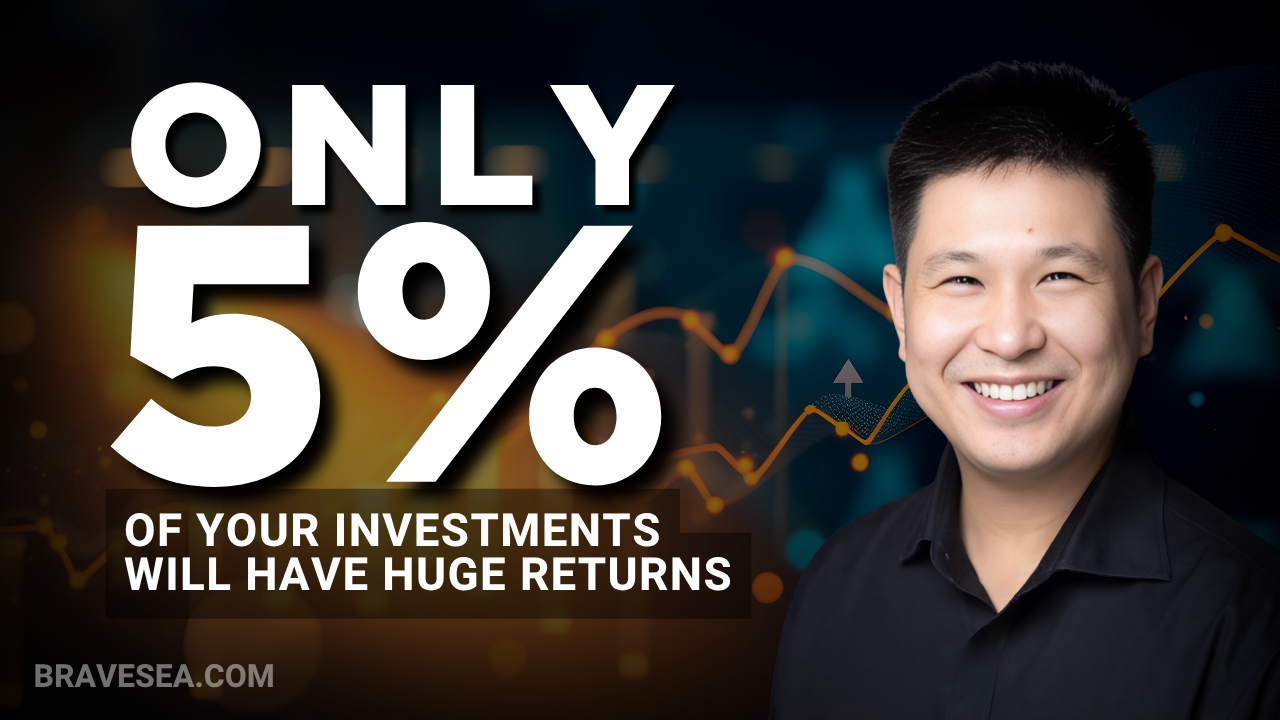
VC Economics & Exit Strategies: Case Studies from Seed to IPO - E689
"Every VC fund is always going to do that assessment and reassessment every three months. From an adding value perspective, they'll be trying to help you avoid failure and increase the outcomes for you. But from a judging perspective, they are going to figure out how to assess you, whether you're on track or off track, and how much time and attention to give to you." - Jeremy Au
"The VCs have to prioritize and figure out what they want to support. They focus their support on converting large wins into unicorns, and small wins into large wins. They have to prioritize their support because there is only a limited amount of value that VCs can provide in terms of man-hours, board support, and portfolio support." - Jeremy Au
"If you look at the Instagram founder, he sold for effectively a billion dollars to Mark Zuckerberg. Evan Spiegel, less than a year later, said no to a similar billion-dollar outcome from Facebook. It's interesting to think about the dynamics of two founders who were both given similar billion-dollar buyer offers—one who said no but arguably should have said yes, and one who said yes but arguably should have said no." - Jeremy Au
In this episode, Jeremy Au breaks down the harsh realities of Venture Capital economics and the dual role VCs play as both portfolio judges and value-add partners. He unpacks the "power law" that dictates why just 5% of startups carry an entire fund, and explains the difficult decisions investors must make when deciding which founders receive their limited time and resources. Using real-world examples—from the entry prices of the Instacart IPO to the billion-dollar dilemma between Instagram and Snapchat—Jeremy reveals what it takes for a startup to succeed and the immense pressure fund managers face to deliver 10x returns. A must-listen for founders navigating the fundraising landscape and investors aiming to understand top-quartile fund mechanics like MOIC and DPI.
00:00 The VC’s Dual Role: Value-Add vs. Portfolio Judge
01:02 The Power Law: Why 5% of Startups Carry the Fund
01:38 The Help Paradox: Prioritizing Winners Over Strugglers
02:23 Case Study: The Price of Entry in the Instacart IPO
04:21 Exit Outcomes: Liquidation, Acqui-hires, and Cash-outs
04:58 The Billion-Dollar Dilemma: Instagram vs. Snapchat
06:05 Raising Capital: The Evolution from Fund I to Fund III
06:51 VC Math Explained: Fund Economics, MOIC, and DPI
08:48 The Harsh Reality of Managing a Venture Capital Fund
Watch on YouTube: https://www.youtube.com/watch?v=3VGwILAA6Yk&list=PLl9u6ECOP8_7scb97PE3whKu4yJVizIOd
Listen on Spotify: https://open.spotify.com/episode/5rNAx1XCGasUw1BUVcGy0l?si=CGKGzk7uSOO0fMNdyR9xJw
Keywords: Venture Capital Economics, Startup Fundraising, VC Portfolio Management, Venture Capital Returns, Startup Exits and Acquisitions, Instacart IPO, Instagram vs Snapchat, MOIC and DPI, Tech Entrepreneurship

How MK Bertulfo Built a 500K+ Community for Filipino Virtual Assistants
"I see that there will be a trend where freelancers can transition to being SaaS entrepreneurs. Instead of just providing day-to-day service as a regular virtual assistant, they can build a service or a platform for their clients. It's amazing to know that we are in an era where Filipinos can start building. For the longest time, we've been known globally for taking care of other people, but now we are encouraging our community members to start building their own apps and platforms to provide solutions." - MK Bertulfo, Founder and CEO of FHMoms
"If you are a virtual assistant, you're literally doing all the things in your power just to keep the business running. I wanted to find a safe space for myself because many of the other communities were toxic, with a lot of bullying and shaming. Since I couldn't find one, I created one. What is nice about FHMoms is that if you are a mom, you need inspiration and someone who understands the exact same challenges you are facing." - MK Bertulfo, Founder and CEO of FHMoms
"FHMoms is the largest online community for work-at-home mothers in the Philippines, with 540,000 members globally. What we do is help Filipina moms get an online job through our digital skills training, apprenticeships, and scholarships, and we also connect them to international clients. There is real money in tech and a lot of opportunities in the global digital world." - MK Bertulfo, Founder and CEO of FHMoms
Join Jeremy Au in this inspiring episode with MK Bertulfo, Founder and CEO of FHMoms (Filipina Homebased Moms), the largest online community for work-at-home mothers in the Philippines with over 540,000 members. MK shares her raw and authentic journey of transitioning from a struggling, overworked call center agent on the night shift to becoming a trailblazing community leader and tech entrepreneur.
They unpack the realities of the remote work industry, diving into the daily challenges virtual assistants face, the intricacies of bridging employer-employee expectations, and the heavy burden of "mom guilt." MK also discusses the critical turning points in scaling FHMoms from a simple Facebook support group into a structured social enterprise and corporation, navigating online bullying, and building hyper-local tech partnerships. Finally, the conversation explores the undeniable impact of Artificial Intelligence on the freelance economy. MK shares how Filipino virtual assistants are actively upskilling to avoid being left behind, utilizing AI tools, and evolving from service providers into SaaS entrepreneurs.
00:00 - The Reality of Virtual Assistant Work
02:00 - The Genesis of Filipina Homebased Moms (FHMoms)
04:40 - Escaping the Call Center Grind & Transitioning to Remote Work
08:45 - Managing Client Hoarding, Burnout, & "Mom Guilt"
14:10 - Scaling FHMoms from a Facebook Group to a Corporation
17:40 - Creating Value via Job Matching & Hyper-Local Tech Meetups
20:45 - Bridging the Gap Between Global Employers and Virtual Assistants
25:15 - AI's Impact on the Freelance Market and Recruitment
27:55 - Upskilling for the Future: AI, Coding, and SaaS Entrepreneurship
34:55 - Overcoming Online Bullying & Building a Sustainable Community
Watch on YouTube: https://www.youtube.com/watch?v=TxcE4GSX_OE&list=PLl9u6ECOP8_7scb97PE3whKu4yJVizIOd
Listen on Spotify: https://open.spotify.com/episode/3nyEcvSj2GMpMvO9Nx4cR2
Keywords: Philippines, Virtual Assistant, Work From Home, Remote Work, FHMoms (Filipina Homebased Moms), Artificial Intelligence (AI) Automation, Freelance Economy, Female Founders
The Hidden Strategies of Venture Capital - E687
"A Southeast Asia fund may see more than 5,000 startups in the ecosystem. From that, they will do deep due diligence into about 100 companies, write deal memos for 50, and ultimately invest in only 10 startups in a year. There is a huge funnel process." - Jeremy Au
"Across stages, VCs are collaborative with one another. However, within the same vertical, VC funds are often highly competitive because there is only a limited opportunity to make an investment at that specific point in the startup lifecycle." - Jeremy Au
"While many consider Y Combinator the 'Harvard for Startups,' from a VC fund strategy perspective, they operate much like an index portfolio. Conversely, funds like Union Square Ventures are focused on making highly concentrated bets, resulting in completely different hit rates for building unicorns." - Jeremy Au
In this episode, Jeremy Au breaks down the inner workings of the Venture Capital ecosystem, exploring how VCs balance fierce competition with strategic collaboration. He details the four core functions of every top-tier VC—sourcing, selecting, supporting, and exiting—and unpacks the distinct strategies funds use, from index portfolios like Y Combinator to venture builders and concentrated bets.
Jeremy also sheds light on the staggering logistics of the VC funnel, explaining how a typical Southeast Asian fund narrows down 5,000 potential startups to just 10 investments a year. Whether you are a founder navigating a stealth startup launch or an aspiring investor looking to understand benchmark hit rates and proprietary sourcing, this episode offers a transparent look at how capital is deployed from pre-seed to growth stages.
00:00 - Collaboration vs. Competition in the VC Ecosystem
00:47 - Categorizing VCs: From Pre-Seed to Growth Stage
01:23 - The Four Core Functions of Every Great VC
01:36 - Four Common VC Fund Strategies Explained
03:45 - The Spectrum of Traction and Startup Evaluation
03:52 - Minority Investments vs. Management Control
04:42 - Benchmarking VC Success: Hit Rates and Unicorns
05:45 - The Logistics of the VC Sourcing Funnel
07:00 - Proprietary Sourcing and Stealth Startups
08:23 - Reference Checks and Deal Referral Mandates
Watch on YouTube: https://www.youtube.com/watch?v=gbjFiih9Wnc&list=PLl9u6ECOP8_7scb97PE3whKu4yJVizIOd
Listen on Spotify: https://open.spotify.com/episode/0GYDJ3JZEdjQWHJYqjB3Tf
Keywords: Venture Capital Southeast Asia, VC Sourcing Funnel, Startup Investment Strategies, VC Fund Economics, Stealth Startups, Venture Builders, Y Combinator vs Union Square Ventures, Pre-seed and Seed Funding
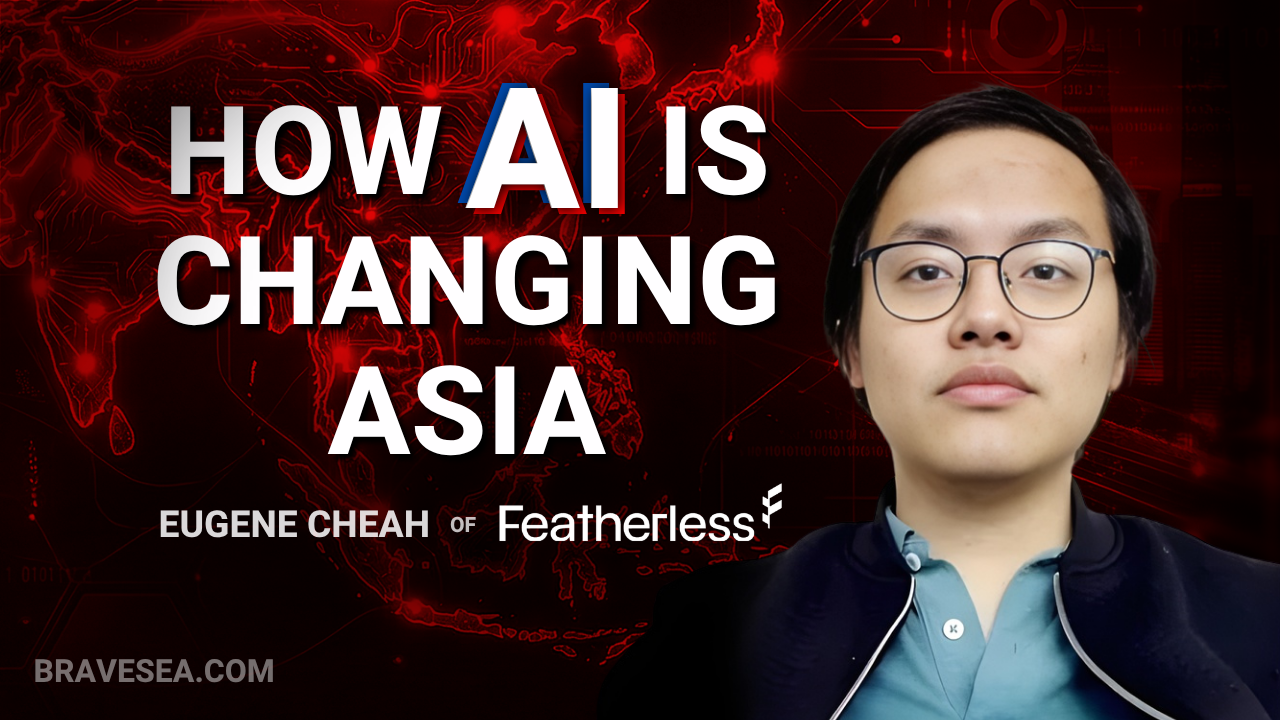
Eugene Cheah: Open-Source AI and the Future of Work - E686
"If you look at the AI landscape, the US and China collectively represent less than half of the world. I don't want a world economy where only half of its participants can use this technology. That is why we focus heavily on researching multilingual open-source AI—to make it accessible for the rest of the world and ensure nobody is left behind." - Eugene Cheah, Co-founder and CEO of Featherless AI
"We heard the same 'winner-takes-all' narrative when IBM Db2 first launched as a closed-source database. Instead, the outcome was a fragmented landscape where enterprises used multiple databases, each with its own pros and cons. That exact same scenario will play out for AI. Once the open-source models become good enough, companies find it more reliable and sustainable to use them over expensive, closed-source versions." - Eugene Cheah, Co-founder and CEO of Featherless AI
"Within Asia, the Philippines felt the impact of AI the most because they are the remote support center of the world. Their call centers were hit heavily as these were the first services automated by AI. My advice to existing industries is to start augmenting with AI now to scale your capabilities, retain your customers, and protect your GDP before those jobs disappear to fully automated systems." - Eugene Cheah, Co-founder and CEO of Featherless AI
Eugene Cheah, Co-founder and CEO of Featherless AI, joins Jeremy Au to discuss his journey from building UI testing tools to pioneering open-source AI architecture. They explore how an internal efficiency project spun out into Featherless AI, a company dedicated to scaling AI inference and making thousands of open-source models globally accessible.
Eugene shares his contrarian bet on the open-source AI ecosystem, drawing parallels to the historical fragmentation of the database industry. He explains why businesses ultimately crave 99.9% reliability and localized specialization over highly intelligent but unpredictable frontier models. They also unpack the geopolitical and socioeconomic ripple effects of AI across Southeast Asia, highlighting the immediate vulnerabilities of outsourcing hubs like the Philippines and service economies like Singapore, and make a compelling case for why multilingual open-source AI is critical for global economic survival.
Watch on YouTube: https://www.youtube.com/watch?v=d1ARNYv30qA&list=PLl9u6ECOP8_7scb97PE3whKu4yJVizIOd
Listen on Spotify: https://open.spotify.com/episode/4DPgwLKJ8gHNtSkYtI6Byl
Keywords: Open Source AI, AI Inference, Southeast Asia Tech, Multilingual AI Models, Singapore Startups, Philippines BPO Automation, AI Policy and Geopolitics
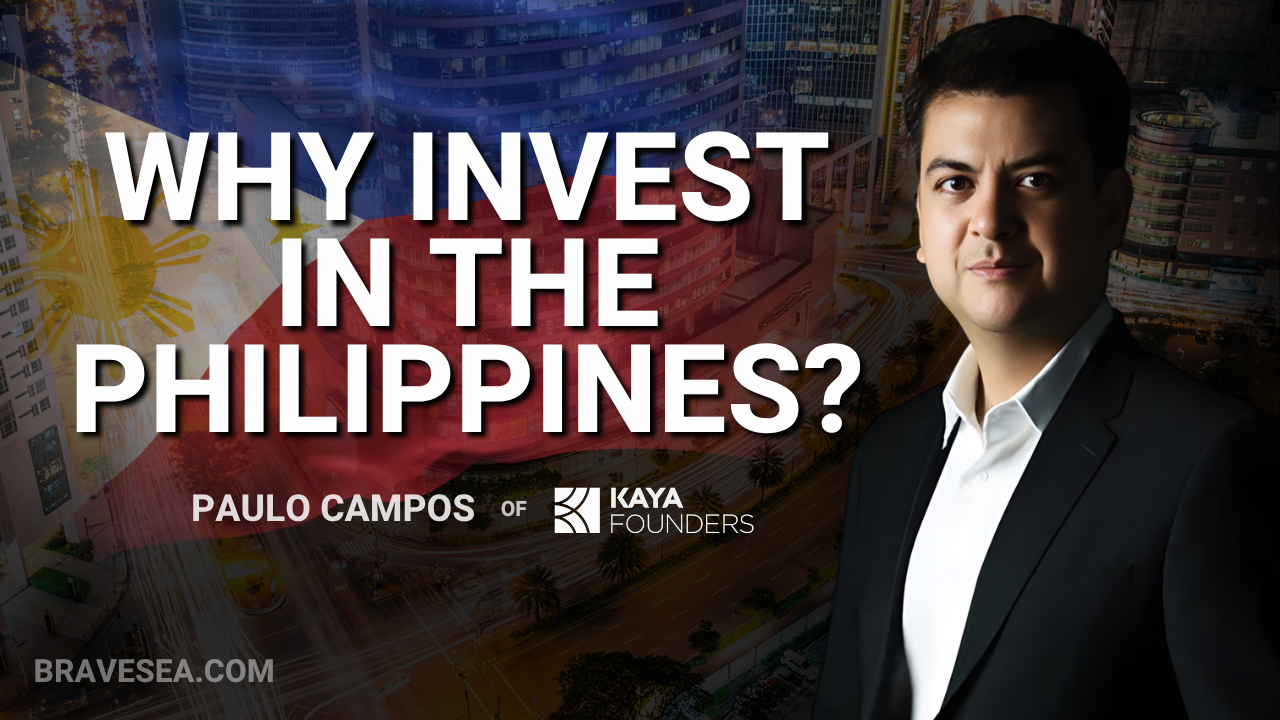
Paulo Campos: Founding Philippines ZALORA & Kaya Founders Venture Capital Lessons - E685
"A startup is nothing but a collection of talent. In 99.9% of companies and startups these days, it's a matter of the team you're able to build, and how you're able to lead and inspire them. Those are professional skills you learn that ultimately set you up for success in the long term." - Paulo Campos, Founding Managing Partner of Kaya Founders
"We provide advice, we provide capital, we provide network, and we can open doors. But most importantly, we provide courage. If seasoned executives and proven founders tell you your business is a good idea, you're going to feel 10 feet tall. You're going to feel like you can punch through walls, and that's the courage that we all need to build great companies." - Paulo Campos, Founding Managing Partner of Kaya Founders
"The Philippines is the youngest country in Southeast Asia, with a median age of 25. You will really see more leapfrogging and adoption progress here. The value you get as an investor—between the real customer traction we are seeing in these emerging companies and the reasonable valuations they command—makes it a great time to both build and invest in the Philippines." - Paulo Campos, Founding Managing Partner of Kaya Founders
Paulo Campos, Founding Managing Partner of Kaya Founders and co-founder of ZALORA Philippines, joins Jeremy Au to discuss the evolution and rapid acceleration of the Philippine startup ecosystem. Paulo shares his personal journey from Princeton and Harvard Business School to making the high-risk leap from management consulting to launching e-commerce in the Philippines.
He unpacks the early days of building ZALORA from a 10-square-meter room and the game-changing, localized insight to build an in-house fleet for cash-on-delivery logistics. Paulo also explores the post-COVID "Cambrian explosion" of Filipino tech startups, the unique leverage of the country's English fluency and global diaspora, and why the Philippines, free from legacy venture overhang—is currently positioned as the most exciting emerging market in Southeast Asia. Finally, he reflects on why early-stage investors must ultimately provide founders with the courage to build.
Watch on YouTube: https://www.youtube.com/watch?v=YiWCk3Y3oqA&list=PLl9u6ECOP8_7scb97PE3whKu4yJVizIOd
Listen on Spotify: https://open.spotify.com/episode/4L0uL5wbnQoTLZhHjCMemk
Keywords: Southeast Asia Venture Capital, Kaya Founders, Paulo Campos, ZALORA Philippines Origin Story, Cash on Delivery E-commerce, Emerging Markets Tech Investing
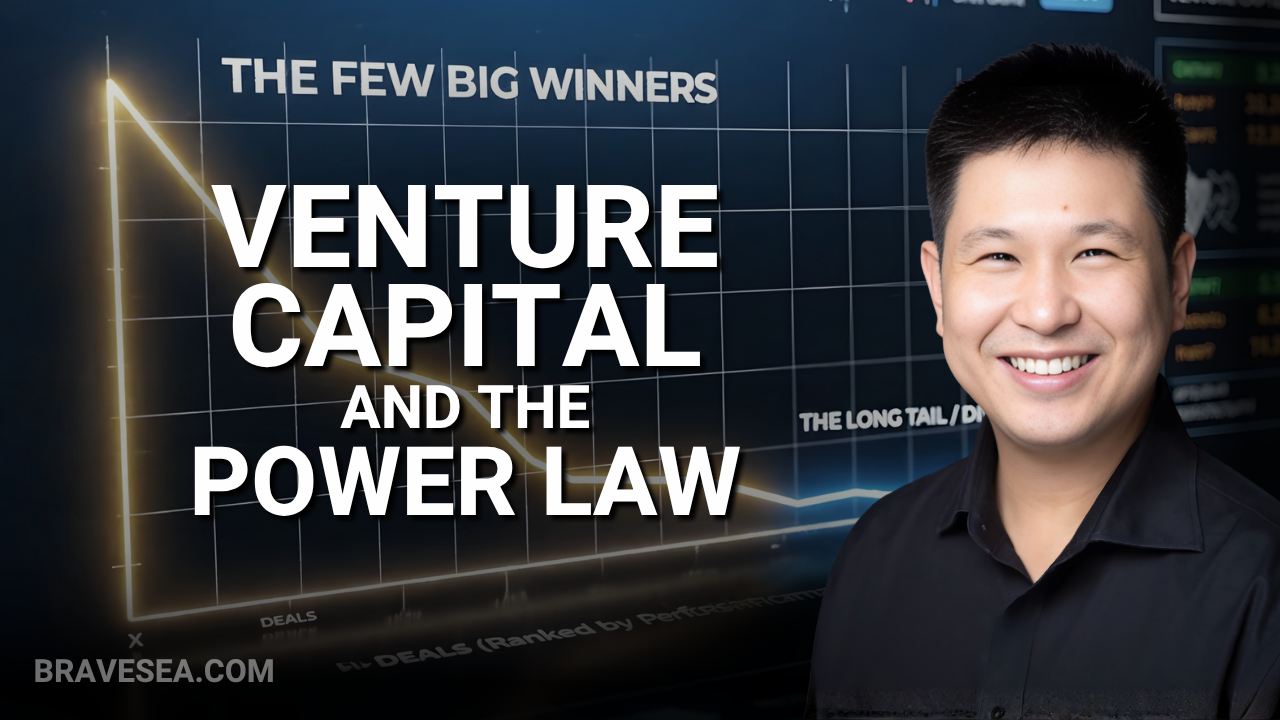
Venture Capital 101: Why VCs are backing other startups and not yours - E684
"VCs are hunting for Olympic gold medalists. They don't look at you and say, 'Wow, you are a good, fast runner who is working very hard and has a wonderful underdog story.' They want to know who is truly going to become number one, or has the potential to become number one. Everybody else is irrelevant. VCs are hunting for home run returns because these home run returns will compensate for the losses of everybody else." -Jeremy Au
"Venture capital is an even more specialized version of private equity because there is much higher risk. They're going to invest in 20 companies, taking a minority stake of often around 20%. Out of the 20 investments they make, they expect one to two of them to generate a 20 to 100x return. Those one or two home runs will generate a massive set of returns that counterbalance the losses from the other 18 companies." -Jeremy Au
"As a startup, you go through something called the 'valley of death' because you don't have revenue and are losing money doing R&D. You may raise money from angels, incubators, or family, friends, and fools. Then, founders raise money from early-stage VCs, later-stage VCs, and eventually IPO on platforms like the New York Stock Exchange, NASDAQ, or the Singapore Stock Exchange." -Jeremy Au
In this session, Jeremy Au breaks down the mechanics of venture capital, exploring how VCs evaluate founders and why they are singularly focused on finding the next unicorn. From the historical origins of venture capital with Georges Doriot to the critical differences between normal distribution and the power law, Jeremy explains the high-stakes math driving VC investments. Listeners will get an inside look at how funds are structured between Limited Partners (LPs) and General Partners (GPs), and map out the entire startup financing cycle—from surviving the "valley of death" with early angel checks to successfully IPOing on global and regional exchanges.
00:00 VC Evaluation & Finding Unicorns: Why VCs look for companies that can double revenue yearly and become ten-year unicorns.
01:17 The History of Venture Capital: Georges Doriot, the "father of venture capital," and the 5,000x ROI of the Digital Equipment Corporation.
03:37 Venture Capital vs. Private Equity: Understanding the difference in risk, control, and expected returns across asset classes.
04:54 Power Law vs. Normal Distribution: Why startups and VC returns mimic Olympic sports and pop music rather than a traditional bell curve.
09:43 VC Fund Organization: How capital flows from Limited Partners (LPs) to General Partners (GPs) and finally into startups.
11:06 The Role of Limited Partners: Why sovereign wealth funds, university endowments, and family offices invest in high-risk VC funds.
13:06 VC Collaboration & Competition: How top-tier venture firms navigate competing against and partnering with one another.
13:26 The Startup Financing Cycle: Surviving the "valley of death" and raising capital from Family, Friends, and Fools (FFF) to an IPO.
Watch on YouTube: https://www.youtube.com/watch?v=0P5NbJFiZFs&list=PLl9u6ECOP8_7scb97PE3whKu4yJVizIOd
Listen on Spotify: https://open.spotify.com/episode/4YFrejSoVzIHZG0S0dcDrO
Keywords: Venture Capital Evaluation, Startup Financing Cycle, Power Law in Startups, Unicorn Startups, Southeast Asia VC, Limited Partners and General Partners, Angel Investing vs VC, History of Venture Capital, Tech Entrepreneurship

Franco Varona on the Philippines' Energy Emergency, and Investing in Solutions for Middle Class Filipinos - E683
"We invest in solutions more so than innovation. Innovation, in my mind, can be trendy. We invest in solutions because we want to invest in things that Filipinos need, no matter what the cycle is." - Franco Varona, Managing Partner at Foxmont Capital Partners
"If we just inch our way forward to where every peso is being spent in the right place, instead of going into somebody's pocket, then that's already accretive to the country's GDP." - Franco Varona, Managing Partner at Foxmont Capital Partners
"When we think about Foxmont Fund III, we talk about it in the context of affordability and accessibility. These are core things that Filipinos need. We have a growing middle class, and they are asking for more options." - Franco Varona, Managing Partner at Foxmont Capital Partners
Franco Varona, Managing Partner at Foxmont Capital Partners, joins Jeremy Au to discuss the macro-economic shifts and emerging opportunities in the Philippines. They unpack the country's recent declaration of a national energy emergency, exploring how external shocks are driving the adoption of renewable energy, solar infrastructure, and Chinese electric vehicles like BYD. Franco also shares a deeply optimistic view on how government transparency and the cleanup of corruption scandals can unlock new GDP growth. Finally, he breaks down Foxmont Capital Partners' investment thesis for Fund III, explaining why they are ignoring trendy tech innovations to focus on brick-and-mortar solutions—such as high-value, low-price gyms (BeFit) and accessible female-focused health clinics (Eluvo)—to serve the rapidly growing Filipino middle class.
Watch on YouTube: https://www.youtube.com/watch?v=x_j0iSFfwUs&list=PLl9u6ECOP8_7scb97PE3whKu4yJVizIOd
Listen on Spotify: https://open.spotify.com/episode/2SyY1lXe2oMjCO0Gx0sZNS?si=9c671852aceb43c8
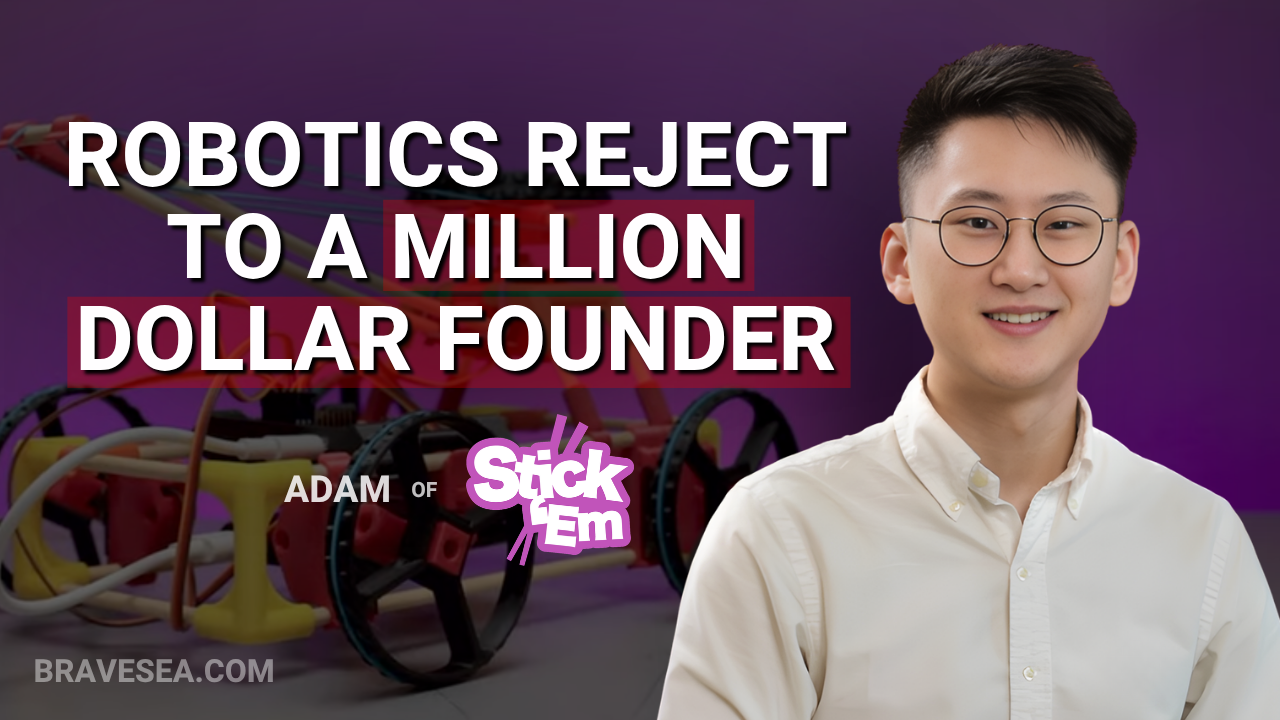
How To Win A $1M Prize And Fixing The Global Education Crisis | Adam Huh Dam of Stick ‘Em - EP682
"The objective of the education system is not to prepare you for a specific job, but to help you learn how to think and how to learn. That is the most important part about our education system—learning how to think and learning how to learn, even as we specialize in vocational institutions or universities." - Adam Huh Dam, co-founder of Stick 'Em
"Increase in screen time and the use of gadgets in schools has not improved, but actually made educational outcomes worse for students. For the first time in global history, we see students' academic outcomes decreasing rather than increasing as these devices are implemented at mass." - Adam Huh Dam, co-founder of Stick 'Em
"In Singapore, robotics kits were very expensive—costing about $600 to $700 each—and there were not enough teachers to teach coding in schools. We are bridging that gap with Stick 'Em to bring quality STEAM education to every child, especially the billion children globally growing up without access to these essential skills." - Adam Huh Dam, co-founder of Stick 'Em
In this episode, Adam Huh Dam, co-founder of Stick 'Em, joins Jeremy Au to discuss the evolution of STEAM education and his journey from a robotics-obsessed student in Singapore to winning a million-dollar global prize. Adam shares the "traumatic" childhood experience of being rejected from a school robotics club due to high costs and limited seats, which fueled his mission to make robotics accessible using simple sticks and connectors. They dive into the "disastrous" impact of AI on current educational outcomes, why cheating via AI is a barrier-to-entry issue, and how the founding team leveraged authenticity to win the Hult Prize in London. Adam also reflects on the future of work, emphasizing that while AI may automate coding and accounting, the core value of human education remains the ability to think independently and empathize.
Watch on YouTube: https://www.youtube.com/watch?v=jaeEyRF3doA&list=PLl9u6ECOP8_7scb97PE3whKu4yJVizIOd
Listen on Spotify: https://open.spotify.com/episode/0vDNDokZJYr94gjQWpoolw
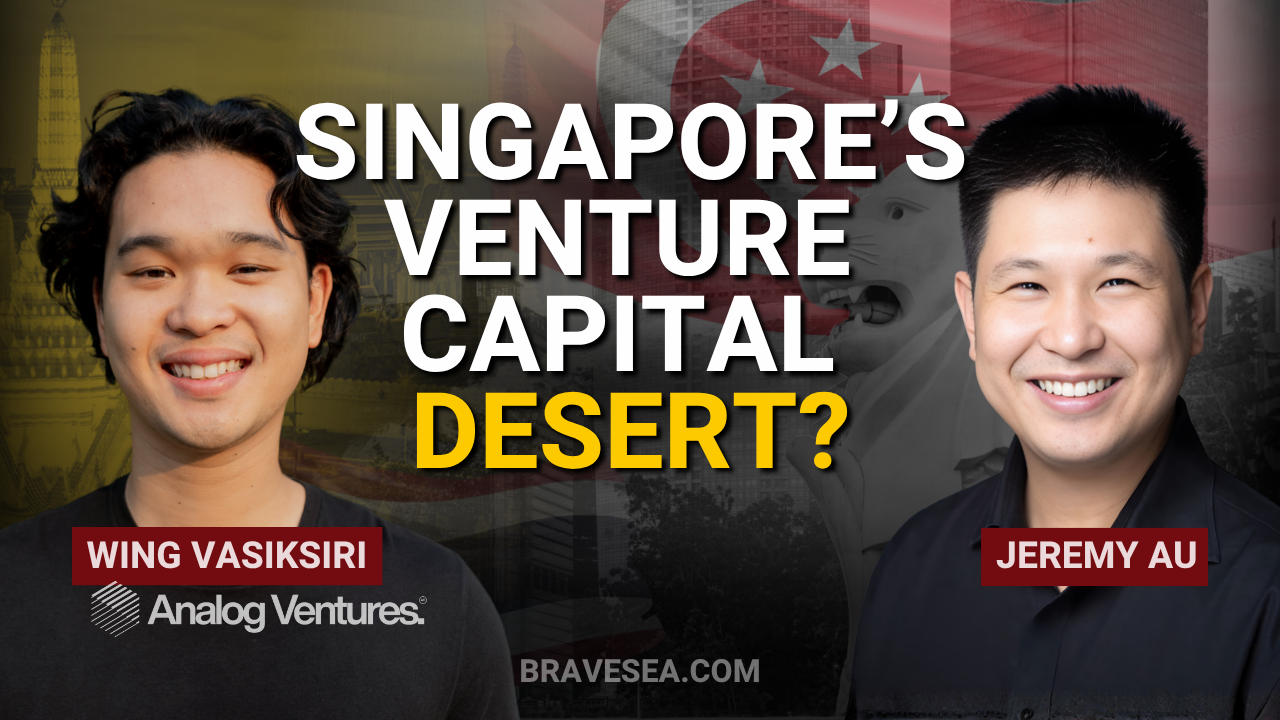
The New Era of Southeast Asia Tech: AI, Deep Tech, Global Scaling and the Future of Energy of Thailand - EP681
"It took me 70 startups and $12 million deployed to build confidence and taste as an investor to concentrate more. If you want to build a concentrated portfolio, it’s quite hard to do that as a solo GP. One of the great joys in this business is when you decide you want to back someone, you plant a flag and say, 'I believe in you.' Building those relationships out to be very meaningful means being in the boardroom when decisions are made, understanding the company on a granular level, and bringing more context to every interaction with an entrepreneur." - Wing Vasiksiri, General Partner at Analog Ventures
"Companies that are building for local or regional markets are definitely struggling. It's harder to raise capital; there are not as many investors willing to fund this. They have to either turn profitable or look for alternative sources of financing. But one big trend we’re excited about is this shift in the types of companies being built: they are headquartered in Singapore but building for a global market—the US, Europe, or Australia. Because businesses are becoming more interconnected than ever, why can’t a global company be built out here now that everything is moving at such a fast speed?" - Wing Vasiksiri, General Partner at Analog Ventures
"Singapore is punching way above its weight class. Immigration to the US has gotten harder, so top talent from Indonesia, Thailand, or Vietnam—and even engineers from India and China who would have tried for the US—are all moving to Singapore. It’s now the new place to go. We are seeing a transition where Singapore is no longer just seeding the initial group of funds, but directly leading rounds for the hottest companies in the world, with the government acting as a live player in the game." - Wing Vasiksiri, General Partner at Analog Ventures
In this episode, Jeremy Au welcomes Wing Vasiksiri to discuss his transition from a solo GP at Wing Ventures to joining Analog Ventures (formerly Forge Ventures) as a Partner. Wing breaks down the evolving venture capital landscape in Southeast Asia, explaining why he moved from a diversified, collaborative strategy to a lead-investor model focused on institutional seed rounds.
The conversation dives deep into the "outside-in" macro shifts affecting the region, including the capital gap in Series A and B funding and the new wave of "global-from-Singapore" startups. They also tackle the brewing energy crisis in Thailand, analyzing its impact on manufacturing, data centers, and the agricultural sector. Wing and Jeremy explore whether Singapore can become the "next Israel" by doubling down on deep tech, semiconductors, and AI, while navigating the challenges of commercializing intellectual property stuck in academic labs.
Watch on YouTube: https://www.youtube.com/watch?v=BDX_p2SyZ7g&list=PLl9u6ECOP8_7scb97PE3whKu4yJVizIOd
Listen on Spotify: https://open.spotify.com/episode/76sUyfC5TgIzhp34bqrYa3
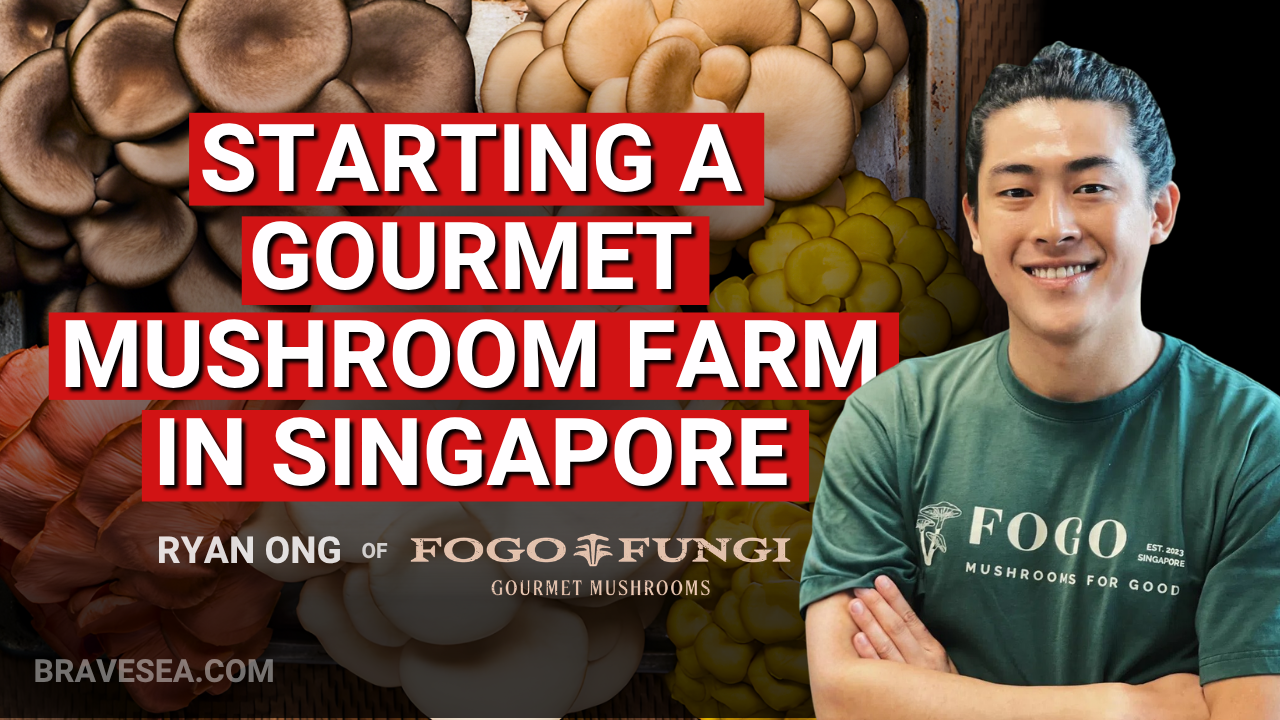
Can Mushroom Farming Help Achieve Singapore's Food Security Goals? Ryan Ong of Fogo Fungi - EP680
"Entering the farming industry as a very young farmer, in a time where the industry's not doing so well, I think that's one of the bravest things I've done recently. It’s not an easy journey, but if you’re going to do something brave, there’s going to be fear there for sure. You just have to surround yourself with the right people who are willing to help you and groom you." - Ryan Ong, the founder of Fogo Fungi
"Gourmet mushrooms are more perishable; oftentimes their shelf life averages out at about one week. The only way we can solve this issue is to produce it locally, directly to the supermarkets and restaurants, cutting out the whole logistic issue and giving consumers as close to day zero shelf life as possible." Ryan Ong, the founder of Fogo Fungi
"Singapore imports over 90% of its food. With parameters such as land scarcity, high labor costs, and high energy costs, farming is incredibly difficult to do in Singapore. However, if you can consistently grow high-quality produce like mushrooms or eggs at good prices, demand will naturally follow, as we've seen with the local egg industry." Ryan Ong, the founder of Fogo Fungi
In this episode, Jeremy Au sits down with Ryan Ong, the founder of Fogo Fungi, to explore the "unorthodox" world of indoor mushroom farming in Singapore. Ryan shares how a random YouTube rabbit hole led him from a career in his family’s hospitality business to building a bootstrap startup in the agritech space. They discuss the misconceptions about fungi—including why mushrooms actually need light—and the harsh unit economics of vertical farming versus traditional methods. Ryan also dives into the "30 by 30" food security goal, the medicinal potential of Lion's Mane, and why he believes local gourmet mushrooms can compete with imports from China and Malaysia by prioritizing "day zero" freshness.
Watch in YouTube: https://www.youtube.com/watch?v=xR9DOuSS72o&list=PLl9u6ECOP8_7scb97PE3whKu4yJVizIOd
Listen on Spotify: https://open.spotify.com/episode/23V2lODhcT1Wcjc4IDWyoR