Skip to content
Navigating Southeast Asia: Jeremy Au on Building, Investing, and Career Pivots

Navigating Southeast Asia: Jeremy Au on Building, Investing, and Career Pivots - E720

"When it comes to angel investing, this is an Olympic-level race and not a pass-fail threshold. If you walk into a gym with 100 people working out, my job as an investor is to pick the top three. If you're number four or five, maybe this year is not your time and you need another year in the gym before you get picked. The criteria is not the magic sauce; it's the high bar at which you select." - Jeremy Au

"Building companies is really, really hard. There is a difference between building a product, building a team, and building a business. First, you have to figure out a product that people actually want to buy. Then, you build a great team and attract them to your mission and vision. Lastly, you must transition from being a founder who is selling something into a CEO who is able to strategize, prioritize, and stack rank decisions in a complex and ever-changing world." - Jeremy Au

"The story that has been told a lot is about the macroeconomic situation of Southeast Asia, like the rising middle class and trade between East and West. What is not told enough is the nuance around localization and the opportunities at a ground level. You cannot paint it with one brush; Singapore is very different from Indonesia, which is very different from Malaysia and Vietnam. An industry thesis really fundamentally has to be broken down at a country level, playing to each country's unique strengths." - Jeremy Au

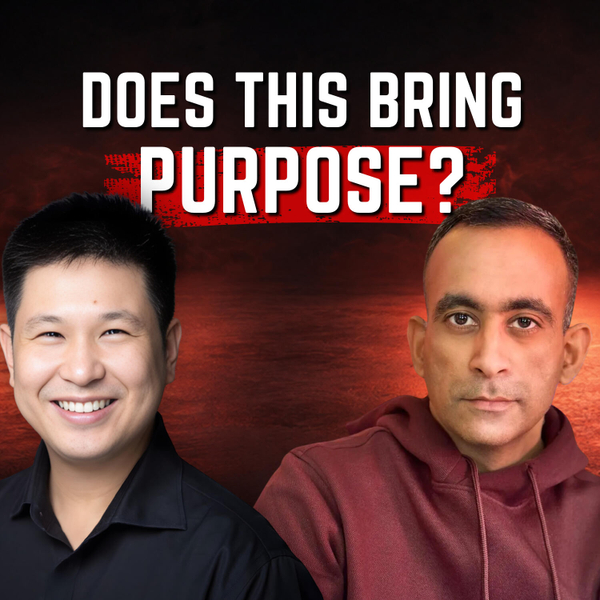
Jeremy Au joined Rohit Malhotra on Life Self Mastery to talk about the moves between founder, VC, and operator, and what each seat actually teaches you. Now leading Cosmetic Physician Partners Asia after Bain, CozyKin, Monk's Hill Ventures, and Lucence, Jeremy is candid about what does not transfer between roles.

They cover the three things every founder has to get right (the product, the team, and the business), the Southeast Asia story that still is not told at ground level, why angel investing is an Olympic-level race rather than a pass-fail test, why coaching someone and investing in someone are two completely different prisms, and the two-by-two he uses to advise emerging fund managers who have deployed capital without returns.

Support the original show: Life Self Mastery with Rohit Malhotra: <https://www.youtube.com/@LifeSelfMastery>

00:00 Intro

01:19 Founder to VC to operator, and back again

03:10 The three things: product, team, business

07:33 Scaling a clinic group from the US into Asia

10:54 The Southeast Asia story nobody is telling

18:30 Why a regional thesis is too broad a brush

22:20 Angel investing is an Olympic race, not a pass-fail test

25:41 Coaching someone vs investing in someone

28:08 Advice for emerging VCs who have not returned capital

35:07 The thread: high-performing teams

41:59 The comfort crisis and the 2% idea

46:54 What he would tell his younger self

50:20 Why Flow Club is his favourite tool

52:37 Where to find Jeremy

Watch on Youtube

Watch/Listen on Spotify

Listen on Apple Podcasts

Keywords: Southeast Asia Tech Ecosystem, Startup Founder Journey, Venture Capital Strategy, Angel Investing Criteria, Business Model Execution, High-Performing Teams, Market Localization in Asia, PropTech and HealthTech, CEO and Operator Roles

Want to get to the latest updates, access to transcripts and exclusive event invites? Sign up now - It's free!

Introduction

Edric Poon: Edric here, producer from BRAVE. First off, if you've been following the BRAVE podcast, thank you so much for your support. And if it's your first time tuning in, please check out our latest episodes on YouTube, Spotify, Apple Podcasts, or simply head over to our website, bravesea.com.

Now, Jeremy was recently a guest on Rohit Malhotra's show, Life Self Mastery, to talk about the moves between founder, VC, and operator, and what he's actually learned from each seat. We thought you'd enjoy this particular episode.

So two of the points that you should be listening for in this podcast would be Rohit on why syndicate leads who haven't returned capital are now piling into OpenAI and Anthropic secondaries, and Jeremy on why angel investing is an Olympic-level race, not a pass-fail test.

They cover the three things every founder has to get right, the product, the team, and the business, the Southeast Asia story that isn't being told at ground level, why coaching someone and investing in someone are two completely different prisms, and much more.

So please support our friend Rohit. Head over to Life Self Mastery and give him a follow, and let us know what you thought about the episode in the comments. Please enjoy.

Founder to VC to Operator, and Back Again

Rohit Malhotra: Jeremy, you've had a very interesting journey. You founded CozyKin, then you became a VC at Monk's Hill, and then you went back as an operator as COO of Lucence, and now you've taken the CEO seat. So what pulled you back into the operator chair each time, and why are you back in the CEO role?

Jeremy Au: Life is really about what you build and who you do it with, and I think that's really what has always inspired me. I've always been in a builder role, whether it was at Bain in consulting, very much learning the basics and foundations, or, at that point, I was just building slide decks, I guess, and analysis models.

But since then, I've always been drawn to places where I can build, and really be surrounded by a great culture of folks. Even at Bain as a management consultant, it was an incredible calibre and team that you get to be part of. And I've been really lucky to be able to be part of so many teams in terms of startups and building culture.

For the roles that you mentioned: when I was a founder for an education tech startup that grew from pre-seed to seed to Series A; building at Lucence as the chief operating officer, growing that out; and as a VC and chief of staff for Monk's Hill Ventures, which was a Series A VC fund, helping them grow and build a lot of the internal systems and tools, but also investing as well.

All of these, from my perspective, had the opportunity and the similarity of getting to build, and to do it with great people and great culture.

The Three Things: Product, Team, Business

Rohit Malhotra: And you built CozyKin during your Harvard days, before it got acquired. So what did the founder journey teach you that an investor seat could not? What were some of the learnings back then?

Jeremy Au: I think that building companies is really hard. I think they are really, really, really, really hard.

And I think that there is a difference between building a product, building a team, and building a business. And those three things, when you fire on all cylinders on all three of those, that's when something larger than itself gets to build and compound.

So for me, zooming out and looking at all the various companies that I've been part of: obviously you start off building a product. And that's going to be about, do people want to buy it? And will people pay money for it? I think it's shocking how many companies and founders actually never really solve this issue. Because it's not just a static target, it changes. Consumer preferences change, technology changes, competition changes. And so the product market fit hunt is very real, and you can never really be static around that.

I think building a team is something that's a little bit more obvious to folks, because most of us who have worked in companies know the importance of hiring well. So the general principles of hiring people who are not bad at their jobs is, I think, a common understanding. But the part that's difficult for startups is hiring people who are really great and hungry for the jobs and willing to take the risk.

And that makes it very difficult, because when I was a starry-eyed undergraduate, I wanted to join Bain, or at that time I also wanted to join Bridgespan Group, which was at the time the world's number one nonprofit consulting group. The brand and the prestige was what drew me in. But for startups, you're very much doing the opposite side, which is that you have a big vision, but nobody knows who you are, and nobody knows your product, and nobody knows whether you're going to make it big or not, for a lot of risk and probably not industry-leading compensation either.

So that's the tricky part of building a great team: you understand the heuristics of hiring great people, but you don't have the ammunition or the brand to make that an easy search process.

And the third is building a great business, and that's where I think a lot of companies also struggle. You can have a great product and you can have a great team, but if you're not thoughtful about your strategy and business, a lot of businesses can let it go to waste.

There's a sliding spectrum. The most common one is not being strategic. And strategy is a function of the fact that the world is competitive. There are other companies going after this, other teams going after it, technology's moving. So strategy is about the things you do and the things you don't do. And as a founder, you're always thinking about all the things you can do, and the big vision and everything. The discipline to say no, and to actually put the resources, putting more wood behind fewer arrows to actually land those shots that you have to take as a business, is actually really tricky for a lot of people to navigate.

So one of the big lessons I've learned from startups is really that transition. First, figure out the product that people want to buy, then at least you're selling something. Two, build a great team and be able to attract them to the mission and vision, which is difficult, and then you can go a little bit further. And then lastly, transitioning from being a founder who's selling something into becoming a CEO or executive who's able to strategise and prioritise and stack rank your decisions in a very complex and ever-changing world.

Those are the three dynamics that are so difficult to master, and I would say that I'm still learning even today.

Scaling a Clinic Group from the US into Asia

Rohit Malhotra: You recently made a move to Cosmetic Physician Partners, and the company has scaled to 85-plus clinics across the US and Europe, and now you're building it from Singapore. So what actually transfers across borders in a clinic partnership model, and what do you have to rebuild from scratch, especially in the ASEAN region?

Jeremy Au: A lot of credit really goes to the founding teams of the US and Europe arms who have already built out a model and really iterated and built out a win-win partnership that works with clinic owners, to be able to work together, collaborate, synergise together as a group, and be stronger together rather than fragmented individual clinics.

One of the benefits for Asia, of course, is that we get the benefit of learning from their best practices. Their war stories, the things to do, the things not to do, the things to prioritise and the things that can afford to wait a little bit longer. That knowledge is really important, because it really goes to building out the fundamentals of the business. So that's highly transferable.

What has to be localised, of course, is the cultural and the healthcare regulations of every market in Asia. And this is actually true because even in America, across 50 states, there are actually 50 different regulation regimes for healthcare. And of course, in Europe there are also different regulation regimes. So localisation is really about saying that in every country there are certain healthcare codes and regulations that you have to be thoughtful about. Being thoughtful about localisation for the culture, the networks, and the regulations that you have to be compliant with is important.

Now, the benefit of being a larger group, as a global group, is that compliance is easier to work on together rather than individually. As an individual clinic owner, to be able to have legal counsel and compliance is actually a very large percentage of your costs in order to be fully compliant. But as a larger group and practice of purely medical aesthetic clinics, this compliance cost is actually shared, but more importantly, it's at scale.

So legal counsel is not just a must-do checklist item to be checked off, but actually can be a strategic advantage, because this is then a capability that's shared by everybody, has the learnings from every market, and is thoughtful about what needs to be done to have a proactive and constructive relationship with the local healthcare regulations.

And that's something that is actually not just helpful for the growth of the group, but also quite compelling for individual clinic practice owners, who may find that it's difficult to handle compliance, HR, accounting, finance, all these strategic enablers that are important and helpful at scale but don't have those economies of scale and don't have that punch when you're just a solo clinic owner.

The Southeast Asia Story Nobody Is Telling

Rohit Malhotra: You've built the BRAVE podcast into the region's number one tech podcast. So what story about the Southeast Asia tech scene is still not being told enough?

Jeremy Au: I think that the story that has been told a lot has been about the macroeconomic situation of Southeast Asia, and I think it's a function of both easiness and intuitiveness.

There's a lot of positive things. Obviously there's a rising middle class, there's a lot of trade between East and West, Southeast Asia, different countries, different cultures. But everybody has a hungry population that would love to be entrepreneurial, to be able to rise up the income ladder and provide for their families, and technology is just a tool for them to get there. Whatever way, form, or fashion it happens, whether it's in agriculture or logistics or supply chain or whatever it is, technology is seen as a way to get there. And I think that's such a wonderful reality that's there. It's also a very easy set of industry reports to do, because you pull up World Bank, you pull up the numbers, and then you kind of see the top-line numbers.

I think that the stories that are not really told, I would say, are a little bit of a barbell. On one end, I think there isn't sufficient conversation about the realities and difficulties at a ground level for companies building in Southeast Asia. And on the other hand, there's also not enough nuance around the localisation or the opportunities at a ground level as well.

I think they're both functions of not really understanding, or the time, or maybe there's not enough time to be able to do that level of analysis. But also we're all wondering whether the reader actually wants to get into that level of detail.

Ground Level: Energy Shocks and Go-to-Market

Jeremy Au: So what I mean by that is, let's talk about the difficulties. I think there are significant challenges in Southeast Asia. Go-to-market is a big part. Income levels are important to be thoughtful about. We look at it and it's like, okay, there's a billion people in this circle. But of course, when you look at India, you look at China, you have to be thoughtful about what's the size of the middle class versus the upper class, and how are you being thoughtful about how you enter the go-to-market and so forth. So there's a lot of nuance around go-to-market, and then also being thoughtful about middlemen and local power structures that you have to navigate and be part of.

And also, these countries have often sizable macroeconomic risk at the individual level. We saw in the recent energy crisis that one year ago nobody would have predicted that energy, oil and gas, would be a shortage dynamic that would impact Southeast Asia so hard.

And now you see that it's impacting some countries a lot worse than others. Singapore is doing fine, because Singapore is well developed, has a lot of reserves, is an oil refining hub, so it continues to have access to oil and gas. But on the other end of the spectrum you have the Philippines, which is an island archipelago, which is highly dependent on gas and certain refinery dynamics. And so for them, they have villages that are currently on emergency power, effectively, because they don't have the energy that they can access.

And so these macroeconomic shocks are difficult, because you can't paint it with one brush and say the whole of Southeast Asia is impacted by energy. Malaysia is doing okay because they are producing oil and gas with Petronas. Brunei obviously is an oil and gas producer, so they don't have an issue. But Vietnam has an issue.

So it's very difficult to do the analysis, because suddenly you're like, okay, this is not a clean headline. China is X, India is Y, Southeast Asia is A1, A2, A3, A4, A5, A6. So it gets very difficult to talk about that.

But that level of nuance needs to be there, because then you start to appreciate the challenges of those businesses. Because your agritech business that was based on fertiliser and inputs and plastics and chicken feed suddenly is viable still in one country but is no longer currently viable in another country, depending on how long this oil crisis lasts.

Ground Level: Air Conditioning and Corporate Florists

Jeremy Au: So there's a level of difficulty that's there at the ground level. On the other hand, at the ground level there's actually a lot of opportunity as well, because obviously the headlines are really about AI models, supercomputers, et cetera.

But I always tell people that if you take a step back, you know that a country like Malaysia will continue to develop for the next 10, 20 years. You know that Indonesia will continue to develop for the next 10 to 20 years. You know that Vietnam will have to develop over the next 10 to 20 years. And so there's actually a lot of opportunity, but they are going to be, at one level, more fundamental, and two, more patience is going to be required. And so does that necessarily fit into the classic Western, or I would say Silicon Valley, type of venture capital model?

And I think that's the crux of it. Because I have friends who are doing good business just servicing air conditioning. And the truth is, if you go to Malaysia, Vietnam, the one thing everybody has agreed they want to buy more of is air conditioning. Because it's hot. It's tropical.

Rohit Malhotra: True. Very true.

Jeremy Au: And so you know that in the next 10 to 20 years people are going to buy more air conditioning, and with more air conditioning there are going to be more maintenance requirements. But it's not going to be an LLM wrapper. So what kind of business do you have to build with that? What kind of financing do you have with that? What kind of teaming do you have with that? And are you comfortable doing that, when you could just work for Google or Meta or Apple as your BATNA career? I think that's a big part of it for a lot of folks.

And so I meet a lot of people in Southeast Asia who say, "Okay, I'm from X great company and I want to build this great technology company, but I realise that I can't build it, because the businesses that people want to buy are a lot more fundamental, and I feel conflicted."

And I'm like, well, isn't that an opportunity? If there's no florist that's really good in your city that can consistently deliver flowers within a certain amount of time, with personalisation, and can do it at a corporate level? In America, that's a solved problem. But it's not a solved problem in Southeast Asia, to have corporate level gift hampers. But that's a totally different business you have to build.

So those are the three pieces. People understand the macro, but people are not close enough to the difficulties at a ground level, and also not patient enough and thoughtful about the localised opportunities in Asia as well.

Why a Regional Thesis Is Too Broad a Brush

Rohit Malhotra: That makes sense. And you also earlier talked about climate tech capital flowing into the region. So is climate genuinely Southeast Asia's next big category, or is it still early? Or is there any sector where you think you'll have the next set of big startups coming?

Jeremy Au: Well, I think an industry thesis really fundamentally has to be broken down at a country level. Southeast Asia is a very difficult category, because again, Singapore is very different from Indonesia, which is very different from Malaysia, which is very different from Vietnam.

So I think writing an industry thesis at a regional level is probably too broad a brush to do. That's one.

Two, there are certain theses that are important, and another way to think about this is that they should play to the country's strengths. I wouldn't go to the North Pole and say, "Hey, I want to build a business on sand mining." Because there isn't sand mining in the North Pole. I think it would also be banned to do so. But it's just a fundamental mismatch between the geography and the business model.

And so when you look at Southeast Asia, I think you'd be quite thoughtful and say, okay, if you have Singapore, what are the strengths that Singapore has? Singapore's strengths are in maritime, middlemen, commodities trading, finance hub, security hub, biotech hub in terms of pharma, healthcare services. So being thoughtful about saying, "Okay, these are the verticals that Singapore is good at, and I'm happy to build a company that has that vertical."

So for example, one set of startups I've been quite interested in seeing has been quite a lot of the shipping and maritime dynamic. And I would say that's quite uniquely Southeast Asian, in the sense that there's a lot of trade that flows through Southeast Asia. If you go back to the Roman and the Indian and the Chinese empires, they were trading silk, tea, and everything in between, and a lot of it went through Southeast Asia. So this has been going back for thousands and thousands of years, the flow of trade through Southeast Asia.

And so there have been quite a lot of interesting approaches to that from various startups that I can think of. Some of them are doing, for example, logistics and container tracking, fast response to various crises, tracking, et cetera. That's one of them.

Others I'm interested in seeing would be the cleaning of ships, actually, which is quite interesting. Historically, barnacles would be scraped by humans, or you have to go into a dock to scrape those barnacles off. But now you can use underwater robotics to get it done. And Singapore is either the number one or number two port in the world in terms of traffic and volume. So it's a great place to build a global business on ship cleaning.

And so these are the kind of country-by-country theses that you have to be thoughtful about as well. Malaysia obviously is a great centre for semiconductors globally, in Penang, et cetera. So there's actually an interesting cluster of semiconductor startups that are emerging there as well.

Angel Investing Is an Olympic Race, Not a Pass-Fail Test

Rohit Malhotra: Got it. And you've been an investor through Orvel, and you've made more than 50-plus personal investments with 100K-plus cheques. So what's your filter at that stage? Are you focusing only on AI startups, because that's been the trade? What do you look for when you're looking to invest at early stage?

Jeremy Au: I'm not going to say anything super interesting, because for me it's really got to be a great team, great product, and great business model. I think that's the heuristic that I'm thoughtful about.

What I can say that I'm a little bit different about is being upfront that this is an Olympic-level race, and not a pass-fail threshold.

So what I mean by that is, if I told you, "Hey, Rohit, I know you're not an Olympic swimming coach, but how would you select a great swimmer for the Olympics?" You would probably say the same thing as every coach would say. Which would be, I want somebody who is good at it physically, somebody who has good perseverance and mindset about it, and thirdly, somebody who I can work with to really improve to the next level. I don't think you're going to say anything very different from most people saying that.

Rohit Malhotra: True.

Jeremy Au: What is different is that at Olympic level, you would be going to the regional meets, you'd be going to the local meets, and then you'd be looking for the diamond in the rough. The number one, number two, number three, the top folks.

And so when it comes to angel investing, as a person and an individual, I'm walking into a gym. And in this gym there's 100 people, everybody's working out, everybody's there to get stronger, get fitter, et cetera. And my job is to pick the top three out of the 100. And so if you're number four, number five, number six, well, maybe this year is not the time that it's going to be your pick. Maybe you need another one or two more years in the gym before you get picked.

So what I'm trying to say here is that the criteria are not going to be the magic sauce of it. It's really the bar at which you select.

When you go to a bodybuilding competition, you need a great upper body, a great lower body, and great charisma. You've got to have all three of them. If you have a great upper body and you have a bad lower body and you have a terrible smile, you ain't going to crack the bodybuilding championship. So if you have two out of three, you're not going to crack the bodybuilding championship. You've got to have a viable shot of winning three out of three.

Coaching Someone vs Investing in Someone

Jeremy Au: And that's where I have the investor hat. My other hat, of course, is as somebody who is a builder and somebody who also likes educating and coaching. And that's where I put on my other hat, via the podcast at bravesea.com. But there I share and say, "Hey, this is how you need to improve. This is what you want to do."

Because those are two very different prisms, and where people get mixed up a little bit is that they get muddled between both. Which is that when you're investing, you're investing in people that you want to coach. And then you're coaching people that you want to invest in. And they're actually two different things.

I always tell people, if I was an Olympic-level coach and I was like, "Hey, I want to help secondary school kids swim better because I want to give back," then you shouldn't have a threshold. You shouldn't be picking and saying, "Okay, by the way, you're a terrible swimmer and you never swam before. I don't want to teach you how to swim." That would be a terrible swim coach. Because you want everybody who never had a chance to swim to have a chance to swim, and then you coach them, and then you have a mindset that you're just coaching them.

And then if your job is to be their agent to the Olympic level, then you get to pick, but you're training them very, very stringently, because you're a high-performance coach in a very tough competition race.

And so from my perspective, I try to be clear to people and say, "Hey, if I'm coaching you, I'm just coaching you, not because I want to invest in you, but because I'm just helping you. And my job is to tell you where you're at. And if I'm investing in you, then my job is to invest in you and tell you how to get to the next level."

But those are two totally different prisms. And it can be quite confusing, because when I was a founder that division was not clear to me at all. So I would go to a coach, and then they actually want to invest in me. And so you're kind of not getting the right advice, because it's loaded with the incentives of investing. And then you go to investors and they want to coach you, but they're not really pushing you to the next level. And so that gets really muddled.

And so it's not to say that you can't have VCs who do both. But I think VCs who have that credibility and interest in being a player coach just have to be super crisp about what is an investment decision versus what is a coaching decision. And those are often related, but not always the same, especially when it comes to high-pressure situations for startups.

Advice for Emerging VCs Who Have Not Returned Capital

Rohit Malhotra: At Orvel, you don't lead rounds. But I've seen a lot of syndicate leads who haven't had any exits in the last couple of years, and they are investing into secondaries for Anthropic and OpenAI, or getting into Series B or Series C of these hot deals, because there's pressure from LPs that they haven't got the exits.

So what advice would you give to emerging VCs? This is a tough time for them to raise new VC funds or to lead those syndicates. Should you have reserve capital to double down on your winners, or should you invest into growth stage deals later on for hot startups?

Jeremy Au: I think about this like a two-by-two, for the people who are listening.

There are people who have already deployed most of their capital versus people who, on the other end of the scale, are looking to raise right now, or put together a thesis. So those are two groups. And then the other axis is high performance versus low performance.

So if you have already deployed your capital on one end and you're already high performance, then you don't need to listen to me. You're already doing well. You're going to raise your next fund. Because you already have high performance for the money you've deployed. Why are you listening to this? So that's one category, and you're off to raise the next fund.

The second category is for people who have already deployed capital and they already have low performance. And what I tell people in this category, I'm just pretty upfront and I just say, look, this job isn't for everybody. Just like being a startup founder is not a job for everybody. For me, being a consultant at Bain I thought was a job for me, but it turned out not to be a job for me. Not every job is for everybody.

And so what I'm trying to say here is, if you've already deployed most of your capital and you're not performing, you just have to be thoughtful that you have already deployed your capital. You have already deployed 80% of your capital. What you want to do is two things. One is really maximise the return for your existing portfolio, and two is don't do anything stupid.

So what I mean by that is, if you've already deployed most of your capital, then this is your time to really help out the companies, do the introductions, run the networks, do the legwork, and see how you can lift up that portfolio.

And I've seen situations where VCs basically say, "Hey, I've deployed 78% of my fund. Performance is not great, but there's one company or two that's really important." They even say, "Hey, we're not going to call the rest of the capital. I'm going to join the company, and I'm going to grow that company." Which is super crazy. But if that company really does make that phase shift, from a decent outcome to closer to a home run, then this person has done the ultimate portfolio management move.

I also say don't do anything stupid, because I've seen horror stories of people who just basically go off mandate. So they start doing funny stuff like investing in crypto, and it turns out badly, and then they lose all market credibility because they were desperate to juice returns. They thought it was a sure bet, and then it wasn't a sure bet. On crypto coins or whatever it is. And you think that's funny, but it actually has happened. I've seen people do it.

Or they go really off mandate. And the interesting part is that if it pays off, then to some extent people get forgiven for it, weirdly enough. But the problem is that in most cases, because you're acting out of desperation, it doesn't work out, and then you burn your credibility and reputation.

And then you go from being a bad VC who was not very good at deploying capital, which is doable because you can always pivot to a new job, like being an executive or founder or whatever it is, so many things to do in life, to being somebody who went off mandate, off script, or did something misleading or fraudulent. And that's where you kind of tank your whole career for the future.

So that's the two quadrants. Obviously, there's another quadrant, which is that you haven't deployed much of your capital, you're still fundraising early, and currently you're either high performance or low performance, but you don't really know.

And I think for this category, just play to your strengths. The market has room for multiple strategies. There isn't going to be one winning strategy. You just have to watch football, or basketball, any sports game: the meta changes, and there are different ways to do the approach.

But what's interesting about business is that it's not like a basketball competition, in the sense that a basketball competition is number one, number two, number three, and people only care about number one. In the land of startups, every startup goes through multiple rounds of funding, and many startups are going to become unicorns. Some become unicorns slowly, but are very capital efficient. Some companies become unicorns very fast, or more than a unicorn.

So there are multiple strategies, there are multiple slots, there are multiple bites at the pie. Some people may prefer leading, some people will be player coaches, some of them are going to be about identifying people with very deep tech approaches. Some people are going to be focused more on momentum investing. Some people are more focused on figuring out startups that fit with national priorities like defence or semiconductors or local supply chain.

So there are different approaches. I think it's just to play to the one that you're good at, and just work very, very well with all of the other VCs in the space. Because right now, globally, almost all VCs are much more collaborative. Back in the heyday of the zero interest rate era, VCs were a lot more competitive, because there was so much liquidity flowing through the system, so people didn't want to share deals. But now people are much happier to collaborate and say, "Okay, if you're good at marketing and I'm good at finance and somebody else is good at go-to-market, three VCs coming together to help this company is going to be more powerful than just one."

And so I think that's something to be thoughtful about for emerging fund managers.

The Thread: High-Performing Teams

Rohit Malhotra: Makes sense. Jeremy, when I reached out to you, I found your profile to be very interesting. You served in the army, then you were at Bain, you've been a founder, a VC, a biotech COO, and now a CEO. What's the thread connecting all of this? And what advice do you give to graduates who are graduating now, who are worried that AI will take their jobs? How have you been successful in moving from one career to another? Any advice for listeners?

Jeremy Au: That reminds me of a time when I was at Harvard doing my MBA, and I had the opportunity to hear about Bridgewater Associates, the world's largest hedge fund, founded by Ray Dalio.

I wasn't really looking at hedge funds. I don't think that was something I was particularly saying makes sense. But I went by to talk to a recruiter who looked at my resume at that point in time. And I was actually blown away, because this person sat down and they said, "Yeah, we like your profile, because one thing we've noticed is that you really like to join high-performing teams, and you like to build them."

And it kind of clicked, because I didn't even know that about myself at that point in time. Before that, I had a very skeptical view of Bridgewater, because I was like, "Ah, what is this team?" And then I was like, wait a moment. This recruiter for their team, because they're so focused on people and talent, took the time to really understand my resume, including my army experience and all that stuff, and just said something that was very revelatory to me.

So I was like, wow, this person is more aware of my interests than I am self-aware of myself. And I thought that was actually a really good moment for me, because that's always been my consistent theme: I like to join high-performing teams, and I like to bring people together in terms of hiring, motivating, and retaining high performers.

That's important, because one thing I sometimes tell people when I have conversations is, "Look, I'm not a coach. I'm a high-performance coach." And what I mean by that is, when it comes to work, I'm not going to be a person who says everything's great, everything's wonderful, and then behind your back says something different.

There's that very junior league soccer team where everybody gets a participation trophy and everybody's nice, and then people go back to the locker room and say, "Okay, this kid is not good at soccer." But that's what a good soccer coach is supposed to do, because everybody wants to learn soccer. And so I would not want a Manchester United soccer coach at my secondary school teaching my kids soccer, because it would be a total mismatch. I want my kids to enjoy the game of soccer, not to get shouted at and given very strong performance grades. That's not the mindset I want to have.

So I want to approach it from a very thoughtful way, which is, I always say, as somebody who joins a company: who do I want to work with? And I want to work with somebody who sees my strengths, is thoughtful about my strengths, deploys me to my strengths, and puts me in a team with other people who have superpowers, and we work together as a team, all together.

And that is actually such a rare culture to have. It's shocking that we can say this over and over again, and we can say this on every podcast, and we can say this all the time. And all of us at dinner at 8pm with friends over drinks will have some conversation where it's just like, "Wow, my boss is not nice," or whatever it is. There's some incompetent person who is destroying the whole team culture. It just keeps happening over and over again, where the professed values of our organisation do not line up with the actual lived reality of the team.

There are so many root causes and so many reasons for why that is. But for me, that's the kind of team I like to work on: I want to be part of a high-performing team that's winning together and plays to my strengths.

And I sincerely believe that when we have great people who are motivated and like one another, and are not jerks to one another, work together, they're going to make the company a better place. And when a company is in a better place, they have the profitability and the compensation needed to structure a workplace that retains coaches and retains the talent there. And so it's a positive flywheel that happens.

And bad things start happening very obviously when the company starts to underperform. Everyone's like, "Oh, the company's underperforming." Then you're like, well, obviously, because somehow the team's not performing as a group. And when a team is not performing as a group, then the company's not going to perform. We've seen that doom loop happen.

So to me, the common thread throughout all of it is that when I was in the army, I got to see what a high-performance culture looks like. I got pushed beyond my limits. I did things that I never thought I could do as a teenager, and my mind was blown. I never rappelled before. I never did road marches of 30, 40 kilometres. I never shot guns and handled high explosives before. And because I had some great commanders and instructors, and they just did it themselves, they went through the same experience, and they just knew I could do it, and they got me there. And I got there.

And I think that's really the crux of it. For every role I've been part of, it's very much saying, okay, is this a leader that I respect and admire and I want to learn from? And do I want to follow them and bring my A game to that team? And then my job in bringing the A game to the team is also helping to bring in the junior teammates who report to me, work with me, collaborate with me, and figuring out how we work together as a better team.

And a lot of that is so simple every time I say it, but I just have to say it again: the dissonance between what is claimed out there versus the lived reality is so huge that actually a good workplace that's high-performing is rare.

The Comfort Crisis: Thermostat, Not Temperature

Rohit Malhotra: No, absolutely. Jeremy, I quickly want to do the top three. What's your favourite business book?

Jeremy Au: My favourite business writing currently is Michael Easter. He's written a few books, like The Comfort Crisis. And I enjoyed the work because he talks about how most people know that taking the stairs is healthy for you, but only 2% of people actually go and take the stairs, even though they know it's healthier for them.

And so to some extent he's building a little bit on another big favourite for people, which is Atomic Habits: start small, build the habits. So there's some similarity there.

But what I found helpful was the mindset that the comfort that we desire as humans, and engineer into our own lives, is also driving a lot of the pain and suffering that we face on an everyday basis.

One way to think about it is that a lot of people struggle to get out of bed. And they struggle for all kinds of reasons. They're in bed, they're using their phones, and they're feeling demotivated, et cetera.

And to some extent, in The Comfort Crisis, this is a comfort crisis, because actually being in your bed with your phone and having food delivered to you is a very comfortable place. But that cocoon of comfort has actually generated that crisis for you. Because historically, when you woke up, you woke up hungry. And because you were hungry, you had to get out and leave your cave and go hunt for food, and run and hunt and struggle, and get some vitamin D sunlight along the way. And then you killed a small rabbit, and then you ate it, and you felt very happy. And then you went to bed.

And you would never, in prehistoric times, ever have somebody be stuck in bed for the whole day eating DoorDash or Uber Eats or GrabFood in bed.

And so it was just helpful, because it was saying that the modern work environment we've generated for ourselves is not necessarily the same thing that will make us happy. And in fact, it's not really about happiness. It's really about the pursuit of happiness, our willingness to go through difficulty and challenge and sacrifice.

It makes me always thoughtful to say, "Yeah, I'm happy right now," versus, "I'm unhappy right now," which I just take as the temperature. The temperature is 18 degrees Celsius. The temperature is 25 degrees Celsius. It's the temperature. What I find more interesting is the thermostat, which is, is this something that gives me purpose?

Because when I was in the army, there were so many times I was very, very unhappy. I can tell you that the army is full of moments that make you very unhappy, like living in a monsoon, in a jungle, having the water basically go through your body and you trying to sleep while mud is flowing around you. You're very unhappy at that point in time.

But when you have a nice sense of purpose and camaraderie and brotherhood, and you have a mission to go from point A to point B, then it's doable. It's survivable. And 20 years down the road it's a fun story that you talk about on a podcast. And you say, "Hey, that was a good time," even though at the time I can tell you I was very unhappy.

And so for me, being very thoughtful about the thermostat rather than the temperature, which is, instead of thinking about happiness and unhappiness, saying, does this bring purpose to me?

And so for me, a lot of it has to boil down to my two young children. I have two young girls, a four-year-old and a six-year-old, and they give me a lot of purpose. And there are very many unhappy moments when you're taking care as a parent. There's a lot of sacrifices you have to make. But at the end of the day, they are in bed and everything, and you're like, "Well, that was kind of worth it." And then the more the years go by, I'm like, "Wow, okay, it was super worth it."

But on a same-day basis, in that evening, you're only at, "It's kind of worth it." You need a couple more years to give you those rose-coloured glasses again to be like, "Oh yeah, it was fun doing the night shift and all that other stuff."

What He Would Tell His Younger Self

Rohit Malhotra: Correctly said. If you could go back to that time when you got into this world of startups, what is the one thing you would have focused on or done differently?

Jeremy Au: If I could travel back in time, I would tell my younger self to create and be thoughtful about my own structure.

I think growing up, for me, I'm very much a belonger and joiner, in the sense that there are institutions I like to join, or build, advance, serve, and have fellowship together. And that is a fantastic skill to have, and it still brings me a lot of joy to belong to the various communities I belong to.

The part that was a struggle for me was that I also had this creative itch of being comfortable building as well. And the tricky part about building a startup or a new entity, a new team, is that you don't get to belong to the structure of the community, because you have to build it.

And so I often think to myself of that image on the internet that shows a golden retriever, very good, loyal-looking, and he has a collar and a leash on, and then the leash is in his own mouth, and he's just walking with the leash in his own mouth.

And I always think about that image all the time. Because for me, one of my struggles was that change in my career after university and after grad school, when I started building my own career, when I had to be my own boss, when I created my own structure. You suddenly don't have a boss giving you deadlines. You don't have deadlines or structures or very clear instructions about what to do.

And in the army, when you have those very clear instructions, you just do them, you get it done, and you exceed expectations. There's a very good joy about it. But when you're the one setting those instructions and creating that dynamic, then you have this dynamic where you're setting a structure for everybody else, which is not that bad, but you've got to set a structure for yourself.

And so for me, what I've had to learn over time is that I have to set my own structures. Which is, I am going to wake up in the morning, and then I am going to play with my kids for 20 minutes and get them up for school and get it done. And then, even though I can work from home, I'm just going to travel to an office that's not my home and work there. And I will block off my own calendar. My boss, who is the yesterday version of me, blocked off these calendar times and set these deadlines for me, and then I will today do those deadlines and execute the work. Because the past me was the boss.

And so giving myself that structure, and being comfortable with that inflection point, would be the advice I would give to myself.

Why Flow Club Is His Favourite Tool

Rohit Malhotra: Totally makes sense. And what would be your favourite online tool? For example, Gmail, Slack, Zoom, ChatGPT?

Jeremy Au: I think my favourite tool is actually Flow Club.

Rohit Malhotra: Flow Club, okay.

Jeremy Au: It's a company that I tried to angel invest in and didn't get a chance to do so, but it happened during the pandemic. It's fantastic, because what they do is basically like Peloton, but for people working together online. So you basically join a video call, and everybody else has their task list, and you're supposed to get things done together for one hour, two hours, three hours.

And I think the reason why it works is because at some level we're all primates. We're all monkeys. Monkey see, monkey do. And if you're in a gym and everybody's working out, it's scientifically proven that when you're in that kind of gym environment you're going to work out harder than if you were going to work out by yourself, because you're in an environment of people, in a tribe of people who are working out hard.

Similarly in the army, when everybody was pushing themselves to 110%, it felt normal that everybody was doing it, and therefore we all did it, and we all figured out how to handle high explosives at the age of 18. Which is a crazy thing to think about. Would you trust an 18-year-old like me with tons and tons of high explosives? Now I'm like, I don't know if I would trust myself, at my midlife crisis version of myself, to handle tons of high explosives. But at 18 years old, I could do it, because people expected me to, and we all expected one another to be able to do it.

So Flow Club is interesting because if you're at home or you're travelling or you're in a hotel room, and you have to get stuff done, it's just nice to be able to dial into somewhere and basically be in a SoulCycle of work. And everybody has to go do their email or taxes, or clean their room, whatever their individual task list is. And then we check off those tasks together simultaneously over the course of that one hour.

Where to Find Jeremy

Rohit Malhotra: This is so interesting. I'm going to check this out. We're going to put that in the show notes. Jeremy, what's the best way people can reach out to you and know more about your work, and your podcast, BRAVE, as well as the VC firm that you're in, Orvel?

Jeremy Au: Just go to www.bravesea.com. It's a podcast on Southeast Asia tech. I volunteer there by podcasting and teaching, and sharing my perspective.

My big value there is, number one, just be direct and upfront. Don't sugarcoat things, because we're in a teaching environment, and so I'm not your boss, I'm not judging you or whatever it is. So it's a safe environment to learn about what I'm seeing in the ecosystem.

And then two is, it's really about bravery. Courage is really about action in the midst of fear. Because if you are not feeling scared at all, then you're not brave. You're just doing it because... Yeah, I'm not scared of eating a matcha cheesecake, so I eat it. Nobody's going to be like, "Wow, Jeremy, you're so brave in eating a matcha cheesecake." No. I wasn't fearful of it. I was looking forward to it. That's not bravery.

So bravery requires you to be scared of something. And the only requisite action for bravery is that you take action. Small step, big step, in-between step. But as long as you take action in the midst of fear, I think that's really important. And that's something that I like to discuss: bravery in the midst of technology, and in the Southeast Asia context as well.

Rohit Malhotra: We're going to put that in the show notes. Jeremy, thank you so much for taking the time to speak to us. I really enjoyed my conversation with you.

Hosted by