

BRAVE: Why Startups Fail: Power Laws, Failure Patterns & Being Too Early - E664
Youtube:https://youtu.be/LvUH1St6Y6E
Spotify:https://open.spotify.com/episode/2PDVDmrwDuIO12NcGQKb8n?si=bb8c03054cc144fc
"Founders can also choose to build new companies, so I call them rebound, revenge, and rebirth. Rebound founders are comfortable with the identity of being a founder, so they move to the next idea as quickly as possible without thinking it through. It is like a rebound relationship right after a breakup. They build a rebound startup because as long as they are doing a startup, they still have an identity and can still fundraise. There are also revenge startups. For example, a founder was fired from a benefits platform by the board and then went on to build a direct competitor. The original company was a unicorn and later collapsed, while the new company became a billion-dollar all-in-one HR platform." - Jeremy Au, Host of BRAVE Southeast Asia Tech Podcast
"All startups are bets. They are bets on the future. They are bets that the future will become reality. They are bets that this company wins the race. They are bets that regulators will not regulate the company out of existence. In each round, investors pay more to find out what the bet really is. The real question is whether the risk taken matches the reward. From both the investor and founder perspective, founders can fail, but they are pioneers of a new world, and they teach us what can work and what cannot work." - Jeremy Au, Host of BRAVE Southeast Asia Tech Podcast"AI robots are back. They may have been too early for their time because hardware is now cheaper, indoor sensors are more available, facial recognition middleware is more powerful, and language is now powered by ChatGPT. AI robots are back for social robots. Jibo is a great example of this. They failed, but they were also ahead of their time, a pioneer of social robots. Today, we already know there will be AI-powered teddy bears." - Jeremy Au, Host of BRAVE Southeast Asia Tech Podcast
Jeremy Au breaks down why most startups fail even after raising capital and why failure is often misunderstood by founders, investors, and the media. Drawing from venture data and real startup case studies, the discussion unpacks common failure patterns, the role of timing and macro forces, and why economic failure does not always mean bad judgment. The episode reframes failure as part of innovation, while staying honest about incentives, power laws, and investor reality.

BRAVE: VC Term Sheets VS. Founder Control, Valuation Myths, Governance & Deal Failure - E663
Youtube:https://youtu.be/NkyBN1lpPPc
Spotify:https://open.spotify.com/episode/3hvcfx1VO09gTf8RxjNbqw?si=1b84cca7134a4d35
"I met a founder in Singapore who was crying. I asked why. He had received a term sheet that was onerous on both economic and control rights. More importantly, it was an exploding term sheet that had to be signed immediately or it would be withdrawn. He called his lawyer, who told him not to sign, but he did anyway because he felt there was no alternative. The next day, he regretted it. He could not sleep. From a founder’s perspective, that is deeply sad. From a VC perspective, you have to respect the investor, because they effectively secured the company at about half the price." - Jeremy Au, Host of BRAVE Southeast Asia Tech Podcast
"Is my company worth this much? Egos often get in the way. I know a startup that had an opportunity to raise money at a price that was effectively flat to the prior round. The prior-round investor refused to sign, vetoed the deal, and pushed for a higher valuation. The company failed to close the capital and died about a year later. This shows the dynamic where, as an incoming VC, you are negotiating not just with the founder, but also with the board and early shareholders." - Jeremy Au, Host of BRAVE Southeast Asia Tech Podcast
"Another important issue is control rights. When someone asks for a high valuation, you can trade valuation for control rights to manage risk. These rights shape governance between founders, management, early shareholders, and later shareholders. They matter more than many founders realize. Over time, control disputes have destroyed many companies." - Jeremy Au, Host of BRAVE Southeast Asia Tech PodcastJeremy Au breaks down how venture capital deals really close, why many fail after the term sheet, and how financial and control rights shape outcomes for founders and investors over a 10-year relationship. Drawing from real cases across Southeast Asia, he explains the hidden trade-offs behind valuation, governance, and trust, and why “good economics” can still destroy long-term value if handled poorly.

Beatrice Lion: From No-Pay Intern to Global VC, Betting Early on AI & Blockchain – E662
Spotify:https://open.spotify.com/episode/5ce0UwMlbOnzKtIo8hJ2r6?si=37673d1d261d47df
Youtube:https://youtu.be/2ZN82aIYPk8
"Everyone is afraid of using AI in their tools because they see it as a black box and do not understand the generated responses. We invested in a company called OpenTopic that focused on generating content for media agencies. That opportunity mirrors why Bitcoin emerged in the first place, which was the failure of the traditional financial system where infrastructure was not robust enough and bank runs occurred. New players entered and asked why there should not be a decentralized system where, in Bitcoin’s case, no one even knows who started it and the system is fair to everyone." - Beatrice Lion, General Partner and CEO of True Global Ventures
"I wanted to be the technophile, the one who says, have you heard about this exciting thing that is happening. That was a pivotal moment for me to decide I wanted to be in this industry because it is where innovation is. I like being the person who introduces new technology to my friends. I do not want to be the technology lagger or the last to adopt something new. I want to be the one who asks, how are you not using this yet. That is what drew me in, and it is the same reason I wanted to enter at that moment and why I feel the same way about AI today." - Beatrice Lion, General Partner and CEO of True Global Ventures
"That moment coincided with the launch of ChatGPT, when AI became understood by the mainstream as a truly transformative technology. More people started using it and became less afraid of it, which made it the right time to deploy into these companies because clients were now asking what AI could help them do. That also made it a bad time to leave, because I did not want to miss being part of this fund at that moment. The pattern kept repeating, and I never felt like I was stagnating or done learning. That is why I never wanted to do anything else, not just for the economic incentive, but because it is always exciting to be part of real innovation." - Beatrice Lion, General Partner and CEO of True Global Ventures
Beatrice Lion, General Partner and CEO of True Global Ventures, joins Jeremy Au to unpack how early conviction, long cycles, and hands-on learning shaped her path from finance student to venture capital leader. They explore why blockchain and AI only look obvious in hindsight, how decentralization solves real risks created by centralized platforms, and why hype often masks weak demand rather than weak technology. The conversation covers building a venture fund from self-funded roots to institutional scale, navigating fundraising and regulation, and what it takes to grow as an investor across multiple market cycles. Beatrice also shares how staying in one firm for years can still mean many different careers, and why resilience and judgment matter more than timing.

Rocky Yu: Inside AGI House, Talent Density & Why AI Is Built by Communities – E661
Youtube:https://youtu.be/26iWt5AumoU
Spotify:https://open.spotify.com/episode/0xOyQBUFZdfmd0sZuidXQv?si=e5631fe2140642a3"I finished college at 20. I grew up in a rural area of China with limited resources, but I developed strong curiosity early about how the rest of the world looked. Right after college, I spent two and a half years traveling the world with no money. I earned some income from university research work, bought a one-way ticket to Europe and the US, and lived by couch surfing, hitchhiking, and camping across unfamiliar places. I often did not know where I would sleep the next day or what I would eat, but things always worked out. The best and worst part was the same thing: dealing with uncertainty. As a founder and entrepreneur, you face uncertainty every day, every moment." - Rocky Yu, Founder and CEO of AGI House
"I did not need to live that way. I had family support in any situation, but I chose to do it out of curiosity. I wanted to understand the rest of the world, what young people like me were doing, and what they truly cared about. I do not believe that visiting a place for a few days is enough. I deliberately spent long periods living at their level to see and experience life as it was. I carried a 70-liter backpack with a tent and sleeping bag and traveled around the world." - Rocky Yu, Founder and CEO of AGI House
"We have seen many stories, and one word comes up often: resilience. You need to be extremely resourceful and resilient. People talk a lot about talent, but the world is not short of it. What differentiates people is who goes the extra mile to make things happen. When you realize, as Steve Jobs said, that the world is built by people no smarter than you, your perception changes. You realize you can be anyone and build anything." - Rocky Yu, Founder and CEO of AGI House
Rocky Yu, Founder and CEO of AGI House, joins Jeremy Au to unpack how early curiosity in computer graphics led him from engineering and startups to building one of the world’s most influential AI communities. They explore why talent density matters more than scale, how AGI House emerged during the pandemic as a mission-first experiment, and what it takes to turn deep technical conversations into real companies. The conversation covers Rocky’s journey from academia to entrepreneurship, how dinners and hackathons sparked breakout AI startups, and why AGI should be understood as a system of applied intelligence rather than a single god-like model. Rocky also shares his views on resilience, uncertainty, and how young people and parents should think about work, purpose, and opportunity in an AI-shaped future.

Eldred Wee: Inside Southeast Asia’s SME Gold Rush, Double Books & the Roll-Up Playbook – E660
Spotify:https://open.spotify.com/episode/2BrjbJUS3XpWYmvLGh7vZN?si=5462d127d03a4b2f
Youtube:https://youtu.be/BZ3qCcezrcU
"Why do I make the decision for six lives? That was when I was brave enough to tell her, crying, ‘Mommy, I’ll be a good boy. I’ll listen to anything you say.’ I said, ‘I don’t want to die. I really don’t want to die. I choose life.’ We survived. I have my child, she is now a grandmother, and my sister has a child too. That moment toughened me and shaped why relationships matter so much to me. People ask why I’m afraid of heights, and I say no, because I almost jumped before." - Eldred Wee, Founder of Edenity
"With AI, vouching is now automated, but vouching means checking whether a real receipt and invoice match the bank statement and the full flow of money. When I reviewed the engagement, I saw receivables rising, sales increasing, and the sales director constantly trying to curry favor every time I visited. I worked on that audit for three years and kept thinking something was wrong. If we did the audit properly, it would not pass. In the first year, I reported it and was told to just close the audit. In the second year, I said I could not do this anymore and that I would take action if it continued. By the third year, everything unraveled." - Eldred Wee, Founder of Edenity
"Audit meant working late, juggling studies and exam periods, and grinding through long nights. I learned a lot and almost uncovered a fraud as a junior. It was hard to navigate because there were many stakeholders. I had to extract information from people who partly knew the truth, piece it together for the finance manager, and then report it clearly to the audit partners. That experience was unique and shaped why I started in accounting and finance." - Eldred Wee, Founder of Edenity
Eldred Wee, Founder of Edenity, joins Jeremy Au to unpack why corporate services and accounting firms sit at the center of Southeast Asia’s next wave of SME acquisitions. They explore how Eldred’s early career in Big Four audit shaped his ability to spot incentives, fraud, and double or triple books, and why these realities define investing in the region. The conversation covers the rise of roll-ups in accounting and corporate services, why organic growth is hard for B2B services in Southeast Asia, and how aging founders and low digitization are creating a narrow transition window for buyers. Eldred also shares why price arbitrage alone rarely works, how culture and trust determine post-deal success, and why relationship-driven execution matters more than capital in small business M&A.

Florian Hoppe: Southeast Asia’s Digital Resilience, AI Infrastructure & the Next Growth Wave - E659
Spotify: https://open.spotify.com/episode/147TDmaS0ERT97vsTDwQf6?si=ad8265642b4d4463
Youtube: https://youtu.be/8XLdOWAnULY
"Two things stood out this year. First, the continued positive momentum. Many expected growth to slow due to global economic headwinds and several high-profile issues in Southeast Asia’s digital economy, yet we still saw double-digit growth in GMV and revenue, more sectors turning profitable, and major platform players performing strongly. Competition remains intense, with constant shifts and new trends emerging, but the overall trajectory stays clearly positive. Second, the focus on AI in Southeast Asia. What stands out is the region’s strong optimism toward AI, with interest levels three times the global average and net positivity higher than any other region." - Florian Hoppe, Partner at Bain"The headwinds came mainly from global macro trends, including trade wars and tariffs. Southeast Asia largely escaped these impacts, even though there was a moment in April and May when uncertainty was high. GDP continues to trend up, and the digital economy has held up well, with double-digit growth across all sectors we examined. While some markets saw high-profile startup failures and audit issues, these did not detract from overall momentum. Beneath the surface, competition remains intense, especially in e-commerce where platform market shares shifted significantly, but the broader direction is still clearly positive." - Florian Hoppe, Partner at Bain
"Once the infrastructure layers are built, essentially laying the rails and pavement, we see a massive boom in data center investment across the region, alongside the emergence of strong local talent. The real opportunity sits in the enabling layer, which can unlock significant new business opportunities in the digital economy over the next decade. AI will reshape and enhance existing digital sectors, but it will also open new growth in areas that were previously constrained, especially healthcare and education." - Florian Hoppe, Partner at Bain
Florian Hoppe, Partner at Bain, joins Jeremy Au to unpack insights from the Bain Southeast Asia Digital Economy Report 2025 and explain why the region’s digital economy keeps growing despite global uncertainty and negative headlines. They explore the long-term forces behind this resilience, including consumer adoption, payments and logistics infrastructure, and sustained middle-class demand. The conversation covers the expansion from ASEAN six to ASEAN ten, how regional scale really works for founders, and why competition from China and global players continues to fuel innovation. Florian also explains why AI and data centers should be seen as foundational utilities, how local AI solutions create real value in healthcare and education, and what investors, policymakers, and parents should focus on as Southeast Asia enters its next digital decade.

BRAVE: How VCs Actually Think About Founders, Unicorns & Growth - E658
Spotify: https://open.spotify.com/episode/1pBgSYGCnUAryHvtJGuJDb?si=7b1c2ba2a2d947a2
Youtube: https://youtu.be/xTImaXI-9-g
"Startup founders have to always make a decision because they either have to persevere or pivot because they are always going through some level of crisis. Persevere means continuing what they are doing, or pivot means changing what they are doing. Founders have to iterate and find the right problem, then finally arrive at the right solution. I was talking to a startup founder and it took him 15 years to generate product-market fit. He built one company, then built another company to service his first company’s problem, and that company ended up being successful. If you look at Slack, it was built by a game developer. They started building their own messaging system, realized the messaging system was a better idea than the game, and Slack was born because they had a problem communicating effectively." - Jeremy Au, Host of BRAVE Southeast Asia Tech Podcast
"We look at Mark Zuckerberg and other founders today and see how amazing they are, and they seem like no-brainers. He is an MIT dropout, and there are incredible stories attached to that. But these are stories told looking back. The tricky part is looking forward. There are 100 MIT dropouts, and most of them are dropping out to build startups, so which one will succeed? There is a gap between who a founder is today and their ability to build a unicorn in the next 10 years. That gap is shaped by time, grit, perseverance, VC support, luck, and macro timing. All of these play a role. The real challenge is choosing one unicorn founder out of 40 top founders who are all scrambling for a VC check." - Jeremy Au, Host of BRAVE Southeast Asia Tech Podcast"When a VC meets a startup, the question is whether it will become a unicorn in 10 years. Is there a way for it to double this year, then double again next year, and so on. I recently reviewed a company with a strong founder in the AI space. After consideration, we felt the historical growth rate was not there, and we did not believe it could accelerate fast enough. We decided to say no, even though many friends had already invested or planned to invest. It was a difficult conversation, but we could not see clear differentiation from other AI startups. VCs are ultimately looking for founders who can build a unicorn over the next 10 years." - Jeremy Au, Host of BRAVE Southeast Asia Tech Podcast
Jeremy Au breaks down how venture capitalists actually think about startups, founder selection, and long-term value creation. Drawing from real VC decisions, classroom debates, and emerging technologies, he explains why learning speed beats polish, why most “obvious” winners only look obvious in hindsight, and how founders navigate pivots, problem selection, and 10× breakthroughs. The conversation also explores how strange technologies move from science fiction to commercialization, and how VCs evaluate scale, network effects, and unit economics in practice.
WhatsApp: https://whatsapp.com/channel/0029VakR55X6BIElUEvkN02e
TikTok:https://www.tiktok.com/@jeremyau
Instagram: https://www.instagram.com/jeremyauz
Twitter: https://twitter.com/jeremyau
LinkedIn: https://www.linkedin.com/company/bravesea
Spotify
English: https://open.spotify.com/show/4TnqkaWpTT181lMA8xNu0T
Bahasa Indonesia: https://open.spotify.com/show/2Vs8t6qPo0eFb4o6zOmiVZ
Chinese: https://open.spotify.com/show/20AGbzHhzFDWyRTbHTVDJR
Vietnamese: https://open.spotify.com/show/0yqd3Jj0I19NhN0h8lWrK1
YouTube
English: https://www.youtube.com/@JeremyAu?sub_confirmation=1
Apple Podcast

Kelvin Chan: From Math to Google AI, Nano Banana, How It’s Built & Where It’s Headed – E657
Spotify:https://open.spotify.com/episode/1UJxhZae3p4I8ZTjT2z1Wo?si=87d5d4b29e8344bc
Youtube:https://youtu.be/56oEw05KUSM
“I hope that AI becomes a partner to people rather than something that replaces or eliminates humans. I believe that in ten years AI will be more reliable, allowing us to trust it with many tasks. If robots become common, that is a good thing because they save time on labor like washing dishes. Today, language models still hallucinate, so we double-check their work. In the future, I hope we can rely on AI without constant verification, coexisting with it and becoming far more productive together.” - Kelvin Chan, AI researcher at Google
“One year ago, I did not expect image editing or image generation to become this good. There is always something new in this field, which is why I stay excited working in AI at Google. We do not know where the limit is, and that uncertainty drives me every day. Ironically, I have no artistic sense at all, yet I work on images. When I take photos for friends, they usually retake them because I cannot frame good shots. That became a motivation for me to work on image editing and generation, because now I can take a random photo and ask AI to adjust the angle or make it more artistic. It is genuinely useful, and it saves me from my friends’ sarcasm.” - Kelvin Chan, AI researcher at Google
“Google encourages us to use the AI tools we build because using them is the fastest way to understand what people need and what can be improved. When we build the tools and then use them ourselves, we learn how to refine them and create better models for the public. This feedback loop makes the work more effective and is what makes this an exciting moment to be working at the frontier of AI.” - Kelvin Chan, AI researcher at Google
Kelvin Chan, an AI researcher at Google, joins Jeremy Au to unpack his unconventional path from mathematics in Hong Kong to applied AI research across Singapore and the United States. They explore how AI research differs from traditional academic work, why iteration and results often matter more than theory, and how scale has transformed research culture from small experiments to highly collaborative, compute-heavy systems. The conversation covers the rapid evolution of image and video models including Google’s Nano Banana model, the push toward world modeling and embodied AI, and how AI tools are reshaping daily productivity for engineers. Kelvin also reflects on choosing AI in 2018 before it was mainstream, and why he believes the long-term future lies in AI as a trusted partner that augments human work rather than replaces it.
WhatsApp: https://whatsapp.com/channel/0029VakR55X6BIElUEvkN02e
TikTok:https://www.tiktok.com/@jeremyau
Instagram: https://www.instagram.com/jeremyauz
Twitter: https://twitter.com/jeremyau
LinkedIn: https://www.linkedin.com/company/bravesea
Spotify
English: https://open.spotify.com/show/4TnqkaWpTT181lMA8xNu0T
Bahasa Indonesia: https://open.spotify.com/show/2Vs8t6qPo0eFb4o6zOmiVZ
Chinese: https://open.spotify.com/show/20AGbzHhzFDWyRTbHTVDJR
Vietnamese: https://open.spotify.com/show/0yqd3Jj0I19NhN0h8lWrK1
YouTube
English: https://www.youtube.com/@JeremyAu?sub_confirmation=1
Apple Podcast

Jianggan Li: China Brands Invasion, Stealth M&A Trojan Horses & Darwinian Competition – E656
Spotify: https://open.spotify.com/episode/00cU6wGB2utIqgcUMspb6y?si=b5decd6b2a344f3e
Youtube: https://youtu.be/4vKHENNO1so
“From an ecosystem point of view, this year we have been talking to many brand operators and retailers who are being impacted by Chinese competitors, and you should feel threatened by the ones who know how to localize. If they do not know how to localize, that is actually a good thing for local players, because if you exclude half of the population as your customers, you will eventually have problems. These are the ones you should look at and study their playbook, and if they can adapt parts of that playbook to this market, maybe you can adapt parts of that playbook as well.” - Jianggan Li, Founder of Momentum Works
“Many F&B players in China see Southeast Asia as a natural extension for expansion for a few reasons. The region is historically linked to China in cuisine types, taste preferences, and the raw materials that can be sourced. In some cases, they can easily tap into supply chains in China, or Chinese suppliers can set up factories locally, which allows them to expand faster. When you look at Chinese F&B players setting up in Southeast Asia, many do not resemble traditional restaurants focused on cooking meals. They operate more like factories.” - Jianggan Li, Founder of Momentum Works
“It is a big shock for many Singapore F&B retailers because there is both a business angle and a societal angle. On the business side, Chinese restaurants sell cheaper, turn tables faster, secure strong locations, and appear backed by investor capital, which makes local players feel outcompeted economically. On the social side, Singapore is a multiethnic society, and for people who are not Chinese or Chinese-speaking, the experience can be difficult. Many outlets are not halal, the menus and ordering systems are in Mandarin, and there is little localization, which makes the experience feel exclusive and closed off to racial or language minorities.” - Jeremy Au, Host of BRAVE Southeast Asia PodcastJianggan Li joins Jeremy Au to break down why Chinese consumer, F&B, and hardware companies are expanding so aggressively into Southeast Asia and global markets. Drawing from years of observing Chinese operators and supply chains, they explore how brutal competition inside China forces firms to look outward, why Southeast Asia becomes a natural first testing ground, and how factory-style operations reshape local markets. The conversation covers why many Chinese brands delay localization, how fast natural selection plays out among entrants, and why the most dangerous competitors are those that adapt quietly. Jianggan also explains how low interest rates, capital controls, and brand acquisitions shape expansion strategies, and what founders and investors in Southeast Asia should learn from this wave of competition.

Lance Katigbak: BCG Filipino Family Report, Overseas Foreign Workers & Health Shocks – E655
Spotify: https://open.spotify.com/episode/7ssISKrDttIjleuSvyNhT0?si=0d2fb20839444681
Youtube: https://youtu.be/Wi1i4f9gGXM
"One of the headline stats we identified was that 64% of families would not be able to afford a hospital bill of 10,000 pesos without having to borrow or use an HMO or health insurance plan. Ten thousand pesos is under 200 US dollars, an extremely small amount of money, and the fact that two thirds of the population is unable to afford that was quite shocking." - Lance Katigbak, Principal at BCG Manila
"The first thing we learned is that there are six different kinds of Filipino families. When asked to define a family, most people describe two parents and two kids, but in reality this standard nuclear structure represents less than half of the Philippine population. The third and more interesting segment is multi earner families, where more than two people work and make a living. These include sandwich families made up of grandparents, parents, and kids, as well as extended families that add an uncle, cousin, or another relative." - Lance Katigbak, Principal at BCG Manila
"So we ran a survey called the Filipino Dream last year, and the top two dreams that emerged were financial security to absorb health scares and starting a business. To understand why these rank highest, it is important to note that when Filipinos talk about financial security against health risks, they are not most afraid of getting sick themselves but of a family member getting sick. When a mother or grandmother falls ill, the entire family is expected to pitch in and help pay for the hospital bill." - Lance Katigbak, Principal at BCG ManilaLance Katigbak, Principal at BCG Manila, joins Jeremy Au to break down why Filipino households, not individuals, are the true drivers of economic decisions in the Philippines. Drawing from BCG’s large scale research on the Filipino family, they explore how family structures shape spending, saving, and borrowing behavior, and why health risk sits at the center of financial anxiety. The conversation covers multi earner and extended households, the role of informal lending, and how overseas Filipino workers remain deeply involved in family decisions from abroad. Lance also explains why most products miss the market by designing for individuals, and how companies can unlock real opportunity by building for the household instead.
WhatsApp: https://whatsapp.com/channel/0029VakR55X6BIElUEvkN02e
TikTok:https://www.tiktok.com/@jeremyau
Instagram: https://www.instagram.com/jeremyauz
Twitter: https://twitter.com/jeremyau
LinkedIn: https://www.linkedin.com/company/bravesea
Spotify
English: https://open.spotify.com/show/4TnqkaWpTT181lMA8xNu0T
Bahasa Indonesia: https://open.spotify.com/show/2Vs8t6qPo0eFb4o6zOmiVZ
Chinese: https://open.spotify.com/show/20AGbzHhzFDWyRTbHTVDJR
Vietnamese: https://open.spotify.com/show/0yqd3Jj0I19NhN0h8lWrK1
YouTube
English: https://www.youtube.com/@JeremyAu?sub_confirmation=1
Apple Podcast

Annie Huang: Taiwan’s Succession Crisis, Search Funds & Returning to Win Locally – E654
Spotify: https://open.spotify.com/episode/5NCQJJgzmLlMR8GsP5DL9Y?si=konf4sikTYqi7oo3SjTrbA
Youtube: https://youtu.be/ARrCiTF3qcA
“The bravest moment in my life was deciding to have my twin boys during my two years of MBA and still graduating on time. I walked on stage to receive my diploma with a child in each arm, and that was the bravest thing I have done. I did this while completing a Harvard MBA and launching a search fund at the same time, which still feels mind-blowing.” - Annie Huang, Founder of Taiwan’s first traditional search fund
“There are pros and cons to it. On the plus side, when I am doing search fund work, many sellers are older gentlemen or their wives, and they are genuinely delighted to hear that I have kids because it signals seriousness and commitment. Many side conversations naturally shift to children. You cannot build trust by talking about sales or operations, but you can build trust by talking about how you play with your grandkids or what their favorite snacks are. These kid-related topics are the best icebreakers and the strongest trust builders when speaking with people across generations.” - Annie Huang, Founder of Taiwan’s first traditional search fund
“Why not? If I had the chance to go overseas to see what top talents are learning and doing and to make friends with them, I did not want to lock myself on the island. That is a common islander mindset. You go overseas because an island is an island and you need to see the world. I knew I wanted a master’s degree in business and I wanted to do it before turning 30, while I still had the energy to work hard, do late nights, and explore what I had and what I lacked. So I did it, and I was fortunate to be admitted to Harvard.” - Annie Huang, Founder of Taiwan’s first traditional search fund
Annie Huang, Harvard MBA and founder of Taiwan’s first traditional search fund, joins Jeremy Au to share how global exposure shaped her decision to return home and build in a market others overlook. She traces her journey from growing up outside Taiwan’s major cities to working across Southeast Asia, then studying at Harvard Business School before choosing entrepreneurship over a conventional prestige path. Annie explains how Taiwanese capital and talent move fluidly across China, Southeast Asia, and the US, why aging founders and overseas children have created a real SME succession crisis, and how search funds offer a practical solution. They discuss her experience fundraising from both global and local investors, what daily life looks like as a searcher speaking with founders nearing retirement, and how becoming a mother during her MBA unexpectedly strengthened trust with business owners. Their conversation explores why the biggest opportunities often sit in familiar markets, how autonomy and equity drive long-term wealth, and what it takes to build conviction while balancing family, risk, and leadership.
WhatsApp: https://whatsapp.com/channel/0029VakR55X6BIElUEvkN02e
TikTok:https://www.tiktok.com/@jeremyau
Instagram: https://www.instagram.com/jeremyauz
Twitter: https://twitter.com/jeremyau
LinkedIn: https://www.linkedin.com/company/bravesea
Spotify
English: https://open.spotify.com/show/4TnqkaWpTT181lMA8xNu0T
Bahasa Indonesia: https://open.spotify.com/show/2Vs8t6qPo0eFb4o6zOmiVZ
Chinese: https://open.spotify.com/show/20AGbzHhzFDWyRTbHTVDJR
Vietnamese: https://open.spotify.com/show/0yqd3Jj0I19NhN0h8lWrK1
YouTube
English: https://www.youtube.com/@JeremyAu?sub_confirmation=1
Apple Podcast

Violet Lim: Founding Asia’s Largest Matchmaker, Dating Stigma vs. Coaching and AI Romance Companions - E653
Spotify: https://open.spotify.com/episode/5lBPM26poIG5TxRGH8HapT?si=5427cd0f479342ec
Youtube: https://youtu.be/8Xuc_mDtWF4
“When people know that I’m a matchmaker, they ask me, ‘I don’t understand why she’s single.’ I tell them I don’t even need to meet their friend to explain why. I say, ‘For example, you say your friend is very good. On a scale of one to ten, how would you rate her?’ If your friend is an eight, what do you think she’s looking for? At least a nine. And if the guy is a nine, what is he looking for? A ten. It’s very simple. Your friend has two options. One option is she figures out how to move herself from an eight to a ten. Or she looks around and realizes the guys who are eights are actually amazing. These guys would love to get to know her better, but she doesn’t even give them the time of day.” - Violet Lim, Co-Founder & CEO of Lunch Actually Paktor Group
“WhatsApp critique is when someone messages you, because some people haven’t dated for a long time, or they dated in a completely different era. For example, the era I dated in had no messaging. Now everything is through text, and some people are just really bad at texting. If you think about it, there are so many options now. Unlike 21 years ago, people have Bumble and Tinder, and chances are they’re talking to many different people at the same time.” - Violet Lim, Co-Founder & CEO of Lunch Actually Paktor Group
“There are so many love scams. The reason love scams work is because the scammers, even though they are bad people, fulfill a certain need that people have. In a way, isn’t it better if people are not scammed but their needs are fulfilled through AI? Obviously, I don’t think this is the most ideal situation, and I’m still trying to focus on the solution I’m trying to roll out.” - Violet Lim, Co-Founder & CEO of Lunch Actually Paktor Group
Violet Lim, Co-Founder & CEO of Lunch Actually Paktor Group, and Jeremy Au explore how dating, expectations, and technology have evolved across Southeast Asia over the past two decades. Violet traces her path from studying law in the UK to banking in Singapore, before leaving a stable career at 24 to start Lunch Actually, now one of Asia’s longest-running matchmaking groups. They discuss the early stigma around dating services, why lunch dating worked as a low-pressure solution for busy professionals, and the realities of expanding across markets like Malaysia, Hong Kong, and Taiwan. Their conversation digs into why some people find partners quickly while others repeat the same patterns, how coaching closes gaps in mindset and behavior, and why surface-level filters often block long-term compatibility. They also examine how dating apps reshaped expectations, how Gen Z, millennials, and Gen X approach dating differently, and how AI companionship is beginning to challenge traditional ideas of intimacy, loneliness, and commitment.
WhatsApp: https://whatsapp.com/channel/0029VakR55X6BIElUEvkN02e
TikTok:https://www.tiktok.com/@jeremyau
Instagram: https://www.instagram.com/jeremyauz
Twitter: https://twitter.com/jeremyau
LinkedIn: https://www.linkedin.com/company/bravesea
Spotify
English: https://open.spotify.com/show/4TnqkaWpTT181lMA8xNu0T
Bahasa Indonesia: https://open.spotify.com/show/2Vs8t6qPo0eFb4o6zOmiVZ
Chinese: https://open.spotify.com/show/20AGbzHhzFDWyRTbHTVDJR
Vietnamese: https://open.spotify.com/show/0yqd3Jj0I19NhN0h8lWrK1
YouTube
English: https://www.youtube.com/@JeremyAu?sub_confirmation=1
Apple Podcast

Caylee Chua: Singapore’s First Renaissance Fair, Creative Grit and How a 24-Year-Old Built a New Festival Culture – E652
Spotify: https://open.spotify.com/episode/3WKIO3O1Nh25POw6X8wYf7?si=c8e8ae34bf6e484a
Youtube: https://youtu.be/hv0pPhc1lQE
"I'm really excited to introduce this concept to Singapore as an immersive outdoor festival. It is an outdoor event rooted in historical elements, typically from the English Renaissance. You will see people dressed as Queen Elizabeth or Shakespeare, alongside buskers playing period-appropriate instruments like the violin and harp. In recent years, Renaissance fairs have become more fantasy-focused, with people dressing as wizards, fairies, goblins, and rats. These fairs are usually held outdoors, with the most elaborate and established versions found in the United States." - Caylee Chua, Founder of Strawberry Champagne Sparkles
"Compared to other Renaissance Faires, our branding leans more toward fairytale because we wanted something more intuitive and closer to medieval fantasy. The obvious references are Lord of the Rings and Game of Thrones, but those worlds are very dark, with a lot of death and violence. I tried to think of something adjacent that everyone in Singapore would understand. Many kids grew up with American and Western fairytales like Disney, which also makes the experience more family-friendly." - Caylee Chua, Founder of Strawberry Champagne Sparkles
"I was lucky with my strategy because I started my socials around April or May and used them as a landing page to build an early audience. I did not post on Instagram until August 3rd, and I made that launch a big moment. For the first few posts, every time I published something, I also sent an email asking people to reshare the content. That helped a lot. The early posts got many views because the initial audience really pushed them out, and that momentum helped us unlock more opportunities." - Caylee Chua, Founder of Strawberry Champagne Sparkles
Caylee Chua, multidisciplinary artist and founder of Strawberry Champagne Sparkles, joins Jeremy Au to share how she built Ren Faire SG: The Origin from a niche idea into Singapore’s first Renaissance Fair. She traces her journey from crafting fairycore jewelry to designing an immersive festival that blends artistry, performance, and community play. Caylee explains how early inspiration from overseas fairs sparked her vision, how months of quiet TikTok posts built the first wave of support, and how strict venue rules forced her to redesign logistics with precision. They discuss why Singaporeans crave spaces for imagination, how grassroots creativity grows when subcultures meet, and why young founders can move fast even without industry backing. Their conversation explores the mix of cosplay, crafts, DnD, book culture, and youth communities that shaped the fair, the emotional work behind cold outreach and rejections, and the courage required to keep building when early metrics stay small.
WhatsApp: https://whatsapp.com/channel/0029VakR55X6BIElUEvkN02e
TikTok:https://www.tiktok.com/@jeremyau
Instagram: https://www.instagram.com/jeremyauz
Twitter: https://twitter.com/jeremyau
LinkedIn: https://www.linkedin.com/company/bravesea
Spotify
English: https://open.spotify.com/show/4TnqkaWpTT181lMA8xNu0T
Bahasa Indonesia: https://open.spotify.com/show/2Vs8t6qPo0eFb4o6zOmiVZ
Chinese: https://open.spotify.com/show/20AGbzHhzFDWyRTbHTVDJR
Vietnamese: https://open.spotify.com/show/0yqd3Jj0I19NhN0h8lWrK1
YouTube
English: https://www.youtube.com/@JeremyAu?sub_confirmation=1
Apple Podcast

Paul Blackstone: Global EdTech Lessons, China’s Hypergrowth Era and Why Mindset Beats Curriculum – E651
Spotify: https://open.spotify.com/episode/2ixzddQGt1W0MjzhwounqB?si=fb5d6025ceb44340
Youtube: https://youtu.be/bMfI6vw0wU0
“I went to the interview, it was partly in Spanish, my Spanish was terrible, and we still cobbled the interview together. Three days later he called and said, ‘I’ve got some good news and some bad news.’ I asked what the bad news was, and he said I didn’t get the teaching job. I asked what the good news was, and he said they were giving me the center manager role and that I needed to fly to Barcelona the next Monday for two weeks of training at the company’s headquarters. I thought, ‘Oh man, let’s do it.’” - Paul Blackstone, Founder of SummitLearn
"China was thriving at that time, and that was the rocket ship. It became an amazing opportunity to learn from a leadership perspective while scaling a business from something relatively small. It was a boiling pot of problems and challenges, but sometimes you have to take those opportunities. You’re going to get punched in the face, things will go wrong, there will always be something, but if you see growth and believe you can learn from it, you hang on because you don’t know where it will take you." - Paul Blackstone, Founder of SummitLearn
"To be an entrepreneur and create something new takes incredible courage and bravery. Anytime you step off and take that entrepreneurial journey, especially when you know it will take three times longer, cost three times as much, and be ten times more painful than you remember, that is brave. From the outside it looks easy, but on the inside you don’t know where the money is coming from to pay salaries that month. To be an entrepreneur and build something from zero demands real courage and bravery." - Paul Blackstone, Founder of SummitLearn
Paul Blackstone, longtime education operator and founder of SummitLearn, joins Jeremy Au to unpack his path from running a small health-food shop in Australia to leading one of China’s largest English-learning organizations and advising education companies worldwide. He shares how early failures taught him to learn fast, why teaching adults unlocked his passion for human development, and how China’s boom years shaped his leadership approach. They discuss how culture and discipline drive scale more than perfect products, why schools struggle to build creativity and mindset, and how parents can raise independent kids in an AI-first world. Their conversation explores the tension between academic metrics and behavioral growth, the power of founder-led culture in scaling teams, and why entrepreneurship can thrive both inside companies and in startup life. Paul also reflects on world-schooling his children, building Curio to fill classroom gaps, and why resilient learners will define the next generation.
Get transcripts, startup resources & community discussions atwww.bravesea.com
WhatsApp:https://whatsapp.com/channel/0029VakR55X6BIElUEvkN02e
TikTok:https://www.tiktok.com/@jeremyau
Instagram:https://www.instagram.com/jeremyauz
Twitter:https://twitter.com/jeremyau
LinkedIn:https://www.linkedin.com/company/bravesea
English:Spotify |YouTube |Apple Podcasts
Bahasa Indonesia: Spotify | YouTube | Apple Podcasts
Chinese: Spotify | YouTube | Apple Podcasts
Vietnamese: Spotify | YouTube | Apple Podcasts
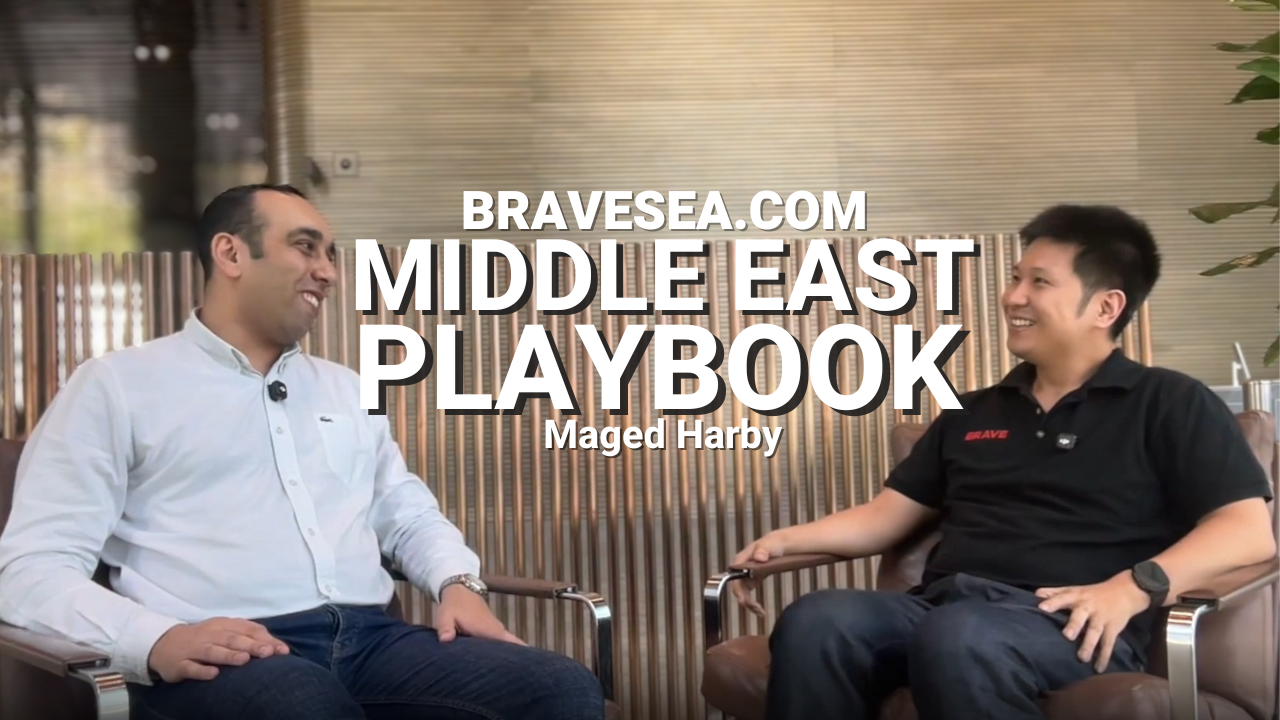
Maged Harby: Inside Middle East EdTech, Egypt Talent Engine and How Localization Decides Startup Success – E650
Spotify: https://open.spotify.com/episode/5n6EUBRs1erxuBoTPxW3ej?si=979f179e32424152
Youtube: https://youtu.be/6txIaL28z2s
"New directions are coming from Gen Z as they believe in entrepreneurship more than having a normal job, which can be a good thing because they want to create new ideas and solve real problems that customers genuinely need. They will likely facilitate the rise of more entrepreneurs, but they should stay aware and focus on solving real problems in their market and ensure the solution can scale to enough customers to succeed."
"Teaching is an important topic because Gen Z is very advanced; my son uses tablets and digital tools better than me, while his teacher is not matching his level. Tablets, digital tools and current teaching methodology still feel old, and teachers need to be updated and aware of new ways of teaching, including how to conduct effective remote teaching and present information in a better way that matches this new generation."
"Regulations are starting to promote startups and include them in the GDP, with laws changing to better fit the needs of new companies. Other countries like Saudi Arabia have an entrepreneurial license that reduces the cost of establishment and jobs in the first three years, and the Emirates, UAE and Qatar offer similar support. The atmosphere in the Middle East is helping and supporting startups to begin their work, and there are good grants and funding opportunities available."
Maged Harby, General Partner at VMS, joins Jeremy Au to share his journey from publishing to building one of the Middle East’s earliest EdTech venture programs, explain how Egypt and Saudi Arabia differ as innovation ecosystems, and guide founders on how to enter the region with cultural fit and strong partnerships. They discuss how EdTech adoption accelerated during COVID, why parents still steer children toward traditional fields, and how Gen Z is shifting toward entrepreneurship. Their conversation explores the contrast between Egypt’s talent depth and Saudi Arabia’s purchasing power, the need for localization in pricing and UX, and why Middle Eastern markets must be treated as distinct rather than homogeneous. Maged also outlines what he hopes to see next in personalized learning and why teacher training remains the region’s biggest unlock.
Get transcripts, startup resources & community discussions atwww.bravesea.com
WhatsApp:https://whatsapp.com/channel/0029VakR55X6BIElUEvkN02e
TikTok:https://www.tiktok.com/@jeremyau
Instagram:https://www.instagram.com/jeremyauz
Twitter:https://twitter.com/jeremyau
LinkedIn:https://www.linkedin.com/company/bravesea
English:Spotify |YouTube |Apple Podcasts
Bahasa Indonesia: Spotify | YouTube | Apple Podcasts
Chinese: Spotify | YouTube | Apple Podcasts
Vietnamese: Spotify | YouTube | Apple Podcasts

Chong Ing Kai: Chopstick Robots, ADHD Grit and Why Tinkering Beats Traditional STEAM – E649
Spotify: https://open.spotify.com/episode/1vyYY6H8ktMPuNezhYbqq9?si=Ylw79Y9STtuiMONgy_hG0A
Youtube: https://youtu.be/T2i9EBPiyic
"Screen time is inevitable because many digital materials have real learning value, and I see Stick'Em as a way for kids to step away from screens. Kids used to go to the playground or void deck to play, but now they choose online games like Fortnite with friends. If we show them that building is fun, robots are fun, and hands-on learning is fun, we can shift them away from being fully digital." - Chong Ing Kai, Founder and CEO of Stick’Em
"We were fresh out of secondary school with useful skills and decided to solve the problem ourselves, so I gathered my friends and we sketched an idea to make something like LEGO robotics but ten times cheaper. It would help kids be more creative than simply building a fixed LEGO creation, and we wanted to work with schools. Five years ago, we built a prototype within a few weeks using our school’s makerspace, spending about 100 USD of our own money. We tested it with our parents’ friends’ kids, spoke to teachers we knew, and slowly grew the idea through continuous testing." - Chong Ing Kai, Founder and CEO of Stick’Em
"Honestly we did not think we were going to win; the Hult Prize was simply a chance to get exposure to great mentors and spend a month in London meeting world-class teams in the social impact space. We planned to refine our pitch, learn as much as possible, and out of 15,000 teams we entered the accelerator with around twenty others, then made it to semifinals, finals, and the final eight, where we realized we might actually have a chance. It became a matter of showing the judges that even though the idea is simple and easy to understand, a million dollars could truly scale our impact." - Chong Ing Kai, Founder and CEO of Stick’EmChong Ing Kai Founder and CEO of Stick’Em joins Jeremy Au to unpack how tinkering shaped his early years, how ADHD influenced his learning journey, and why he built a chopstick robotics kit to make STEAM education affordable for all. They explore how schools struggle with hands-on learning, why teachers need flexible tools rather than rigid kits, and how students learn better when they build instead of follow instructions. Their discussion covers the rise of open-ended tinkering, the pitfalls of screen-first childhoods, and the structural challenges of selling innovation into schools. Kai also shares how Stick’Em grew from a hundred-dollar prototype to a company used by thousands of students and how winning the Hult Prize at 22 changed his plans for global expansion.
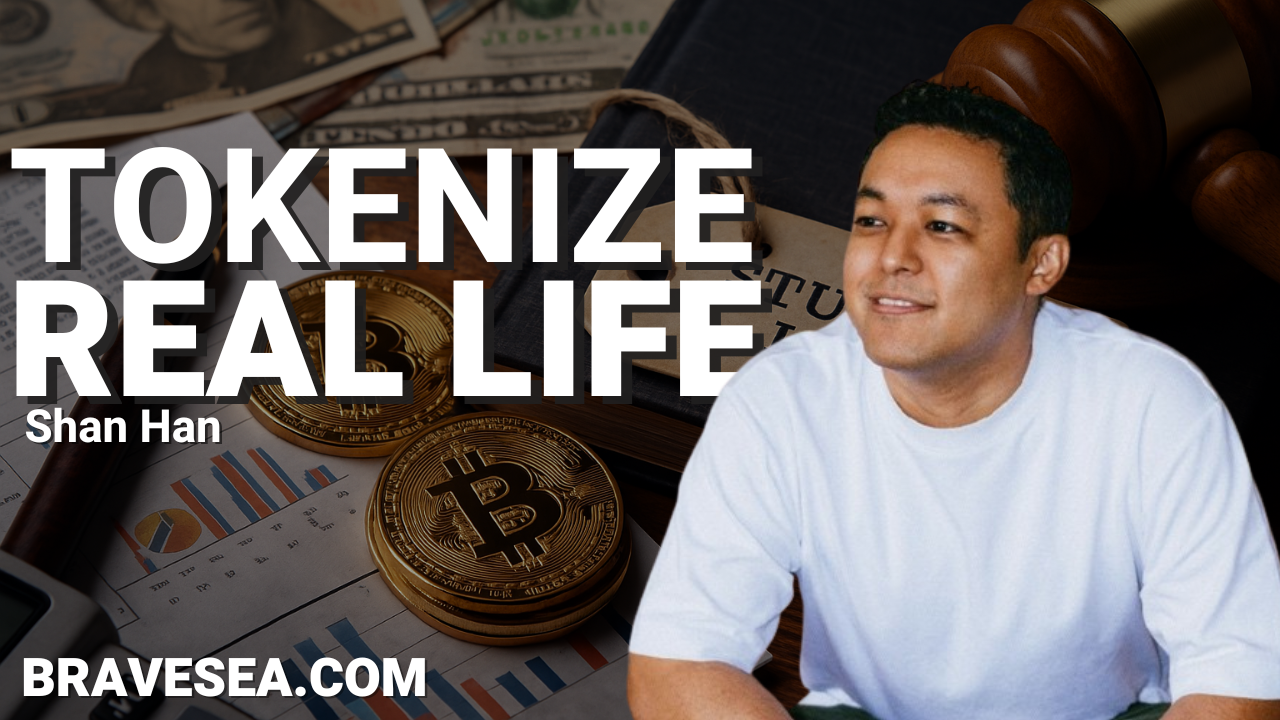
Shan Han: Crypto Lessons, Boom Bust Belief and Funding Students the Web3 Way – E648
Spotify: https://open.spotify.com/episode/0GrgShMUAE2zeETQ11k3vf?si=9ea8fd6d823b4346
Youtube: https://youtu.be/BBnqH3SE3e4
"Education is expensive, and in emerging markets many students have limited options; the crypto and DeFi markets offer a single global liquidity pool that lets anyone place capital into one source that can be distributed to underserved places like the Philippines for student loan financing, and real loans have already been originated to fund students in the Philippines and Indonesia with plans to continue scaling." - Shan Han, Portfolio Manager at Animoca Brands
"Fundamentally all on-chain capital is seeking yield and we're bringing a high-quality yield that exists in the real world that's hard to access but we're bringing it on chain and making it investible for people; that is one of the key things we're doing here, and importantly we're simplifying access to it because if you think about it an investor in London who wants to invest in student loans in Vietnam faces multiple steps and might have to put money into a fund that goes into another fund that then gets distributed through probably five intermediaries before the capital reaches the borrower, and at each step there is structural inefficiency and additional cost, so that is the simplification piece on chain." - Shan Han, Portfolio Manager at Animoca Brands
"But what's also exciting is that with blockchain technology you can do meaningful things, such as creating alternative credit by using data points that students already have; in Web2 this raised privacy concerns, but with zero-knowledge proof technology you can take that data, create a ZK-proof, and build new alternative credit scoring models for students who would not otherwise have one, bringing ancillary benefits that are driven by capital and supported by the technology." - Shan Han, Portfolio Manager at Animoca Brands
Portfolio Manager at Animoca Brands and former Chief Investment Officer at Node Capital, Shan Han joins Jeremy Au to trace his path from Hong Kong trading to fintech and Web3, discuss how early crypto grew from ideology, and explain why tokenizing assets like student loans can unlock education across Southeast Asia. They explore how customer urgency validates real problems, how global liquidity reshapes emerging markets, and how regulation and permissioned systems will define the future of crypto. Shan also reflects on leaving hedge funds to build companies that solve urgent needs.

Jianggan Li: China vs. USA Tactical Pause, Moves vs. Countermoves & Rare Earths Leverage – E647
Spotify: https://open.spotify.com/episode/61R81hDG5zgeJPHvsn4l4k?si=152b8a02d323476a
Youtube: https://youtu.be/6bsWJ4GP8QU
"America looked at China as Russia with communist leadership and a weak, fragile economic engine, assuming China was politically communist and economically the same. The Chinese economy is actually a hybrid system with a communist structure on top and a strong capitalist engine underneath that drives production, innovation, and competition. That bottom engine responds quickly to tariffs, policy changes, and the closing of the de minimis loophole, revealing far more flexibility than many expected." - Jeremy Au, Host of BRAVE Southeast Asia Podcast
"Media outlets naturally focus on stories that attract attention and clicks, making nuanced views hard to deliver, and if I'm running a media outlet and driven by KPIs, I will write something sensational that gets more clicks, forwards, likes, and comments compared to a balanced analysis." - Jianggan Li, Founder of Momentum Works
"NVIDIA said that if the US prevents them from selling top-end chips to China, China will develop its own, and that narrative resonated with some people in the administration, leading to late-year moves to relax certain rules. From both a narrative and prediction perspective, it is worth thinking beyond headlines by mapping the players, the scenario, and how each actor’s moves could shift the landscape, and if you do not want to run that analysis in your own mind, you can run it with ChatGPT, which handles this kind of strategic game modeling well." - Jianggan Li, Founder of Momentum Works
China analyst and Momentum Works founder Jianggan joins Jeremy Au to break down how US–China tensions evolved through a year of tariffs, rare earth leverage, supply chain shocks, and fast-moving geopolitical swings. They examine why both sides misread each other, how Chinese companies adapted faster than expected, and why the global system settled into a tactical pause instead of a decisive split. Their discussion shows how on-the-ground China differs from Western narratives, how product iteration and factory conditions changed under competitive pressure, and why neither side can force a quick victory. Jianggan also shares insights from thirteen trips across China as he tracks e-commerce exporters, shifting macro sentiment, and the emerging negotiation patterns that shape 2026.

Kristie Neo: Middle East & China Partnership Acceleration, Secret Power Corridors Reshaping Global Markets & AI Megaprojects – E646
Spotify: https://open.spotify.com/episode/17VbPPcalOQ1LbrGnBo2Zp?si=a63b190f539e4069
Youtube: https://youtu.be/CqdLklyyquY
"the crux of the issue is that there's a fundamental underreporting of this shift I have traveled the Middle East over the past five years and the magnitude is not obvious western media focuses on the West Middle East dynamic and on China West tensions but there is systematic underreporting about the relationship between the Middle East and China which remains a neglected topic" - Kristie Neo, VC & Startup Journalist
"Saudi Arabia was historically the most isolationist and insular of the Arabic states but that shifted when MBS entered the picture in 2018 and pushed to open the kingdom by inviting foreign investors to help develop the economy build and invest and within just five to seven years he rolled out large economic reforms under the Saudi 2040 vision and as Chinese companies look for growth beyond the US they turn to other markets after Southeast Asia and India pushed them out which makes the Gulf one of the last frontiers for expansion." - Kristie Neo, VC & Startup Journalist"the China Gulf corridor is the one everyone talks about because it involves China and Saudi Arabia but there are many more corridors emerging and 2026 will bring even more attention to the Gulf Africa corridor and it is surprising to now discuss Southeast Asia and Latin America which barely had any ties until comparisons like the fintech ecosystems began these cross border exchanges and talent flows are only in their early stages and much more is coming in the years ahead" - Kristie Neo, VC & Startup Journalist
Jeremy Au and Kristie Neo break down how China, the Middle East, and Southeast Asia are forming new economic corridors that reshape trade, capital movement, and technology strategy. They describe how China and the Gulf now work together at a scale that surpasses Gulf–West flows, how the UAE and Saudi Arabia use bold planning to diversify their economies, and why Western reporting still misses the magnitude of this shift. They examine how Chinese overcapacity fuels Middle Eastern mega projects, how sovereign funds on both sides deepen cross investment, and how AI, data centers, and energy abundance position the Gulf as a future compute hub. Kristie also outlines the gap between vision and execution in projects like NEOM, while Jeremy reflects on how these moves echo earlier global cycles.

BRAVE: The Startup 10x Strategy and the Moats That Keep You Winning - E645
Spotify: https://open.spotify.com/episode/1EhNP2nnxuMt4AzxJ5bW1c?si=cd7a8270a4bb45e8
Youtube: https://youtu.be/KpVMgqzDq0Q
"Many people use ChatGPT for marketing because instead of hiring someone for 60,000 dollars a year, they can pay 600 dollars a year for AI that delivers equivalent quality, creating a 100x cost difference as companies choose AI SaaS over hiring a fresh graduate for marketing." - Jeremy Au, Host of BRAVE Southeast Asia Tech Podcast
"Starlink customers grew sharply from 2020 to 2024 because many regions still lack good internet, making Starlink a 10x better product with stronger speed, reliability, and access, and this improvement in coverage and quality raises the possibility that users may eventually choose Starlink over local telcos like SingTel or M1 since paying the same subscription price could provide global roaming anywhere once enough satellites are deployed, which is why traditional telcos are increasingly concerned about this shift in how people may choose their future phone access." - Jeremy Au, Host of BRAVE Southeast Asia Tech Podcast
"Airbnb created more value than Uber and Lyft for every dollar raised because as a sharing economy platform the more people who use Airbnb the more apartments become available and the more people continue to use it, which makes the company far more capital efficient by generating roughly a 10x return relative to the funding it raised compared to Uber and Lyft which produced only about 2 to 3x, and although Uber is larger with more funding and Lyft is smaller with lower market share and valuation, Airbnb stands out for creating significantly more value for each dollar invested." - Jeremy Au, Host of BRAVE Southeast Asia Tech Podcast
Jeremy Au outlines why founders must choose a single 10x advantage and commit to it. He explains how products win by being better or faster or cheaper than the status quo and why unfair advantages are required to defend that lead. He also highlights the Southeast Asian invention of the USB thumb drive as a case where a first mover delivered a better experience but still lost when fast followers and scale overtook them.